Finding the right large-print cross stitch kits for seniors makes the difference between an evening of relaxed stitching and one spent squinting at a chart. As eyesight changes, a well-designed kit does most of the work for you: bigger symbols, higher-contrast fabric counts, and pre-sorted thread so you spend less time hunting for the right shade and more time actually stitching. This guide covers what to look for in fabric count, chart size, thread organization, and lighting, plus our picks for kits that hold up well for low-vision and aging hands.
Ready to buy? Check current prices on Amazon and compare deals before you decide.
For background on the craft itself, see the overview of cross-stitch technique.
Review Methodology: We compared large-print cross stitch kits marketed toward older stitchers and anyone with reduced near vision. We looked at fabric count (lower counts mean bigger, easier-to-see holes), chart symbol size and color contrast, whether floss came pre-sorted on organizer cards or bobbins, needle type, and how kits performed based on verified purchase reviews and community feedback from stitching forums.
[table-of-contents]What Makes a Cross Stitch Kit Truly Low-Vision Friendly
A genuinely senior-friendly kit starts with fabric count. Standard Aida cloth is often 14-count, meaning 14 stitches per inch; low-vision kits typically use 11-count or even 6-count “Big Stitch” Aida, where each hole is noticeably larger and easier to locate with the needle. Chart design matters just as much as fabric: look for charts printed with bold, high-contrast symbols rather than thin outline grids, and ideally color charts rather than black-and-white symbol-only charts, since matching a shaded color swatch is far easier than cross-referencing a legend under dim light.
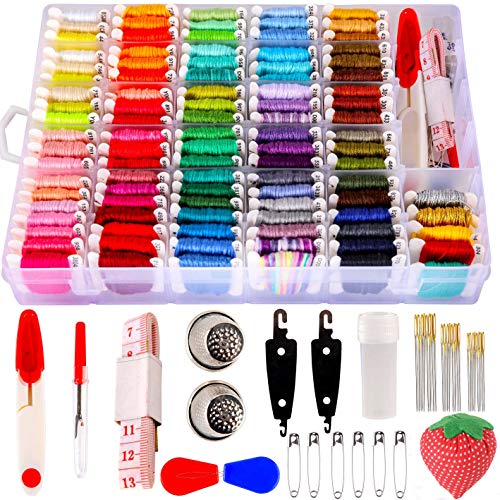
Thread organization is the other major factor. Kits that pre-cut floss onto labeled bobbins or organizer cards save enormous amounts of squinting compared to a loose bundle of skeins that all need to be sorted by tiny printed color numbers. A magnifying needle threader or a self-threading needle is a small addition that removes one of the most eye-straining parts of the whole hobby.
Fabric Count and Chart Size Compared
11-Count Aida: The Sweet Spot for Most Beginners
11-count Aida offers noticeably larger, easier-to-see holes than the 14-count fabric used in most standard kits, while still allowing reasonably detailed designs. It is a strong default choice for anyone transitioning from standard-count stitching due to vision changes, since patterns are widely available in this count and finished pieces still look detailed at normal viewing distance.
“Big Stitch” 6-Count Aida for Maximum Visibility
For more significant low vision, 6-count Aida (sometimes marketed as “jumbo” or “big stitch” Aida) uses a plastic-canvas-like weave with very large, obvious holes. Designs at this count are simpler and finish faster, which also makes it a good choice for anyone managing hand fatigue alongside vision changes, not just vision alone.
Pre-Printed Fabric vs Counted Charts
Some kits print the design directly onto the fabric so the stitcher follows printed color blocks rather than counting squares on a separate chart. This removes the count-and-track step entirely, which is often the most fatiguing part of cross stitch for anyone with reduced near vision, at the cost of slightly less flexibility in colorway choice.
Lighting and Magnification Tools Worth Adding
Even the best kit benefits from proper lighting. A daylight-balanced LED lamp with an adjustable arm reduces glare and eye strain far more than an overhead room light. Many stitchers with low vision add a lighted magnifier that clips to a stand or hangs around the neck, freeing both hands while keeping the working area enlarged and well lit. A slotted floss organizer box keeps pre-sorted thread visible at a glance instead of buried in a bag.
Positioning also matters. A stitching frame or hoop that holds the fabric taut and at a comfortable angle reduces the need to hold fabric close to the face to track stitches. Combined with a lamp positioned to avoid shadow across the working hand, these small adjustments often make more practical difference than fabric count alone.
Our Top Picks for Large-Print Cross Stitch Kits for Seniors 2026
These picks balance fabric count, chart clarity, and thread organization for stitchers who want to spend their time stitching rather than squinting.
| Kit Type | Fabric Count | Chart Style | Thread Organization | Best For |
|---|---|---|---|---|
| Big Stitch Starter Kit | 6-count jumbo Aida | Large color-block chart | Pre-cut floss on labeled cards | Significant low vision or hand fatigue |
| Classic Large-Print Sampler | 11-count Aida | Bold high-contrast symbol chart | Floss on numbered bobbins | Stitchers wanting more design detail |
| Pre-Printed Pattern Kit | 11-count printed Aida | Design printed directly on fabric | Bagged floss sorted by color | Stitchers who dislike counting charts |
| Travel-Size Low Vision Kit | 11-count Aida, small hoop | Simplified single-page chart | Pre-sorted floss card | Portable projects and short sessions |
| Deluxe Magnifier Bundle | 11-count Aida plus lighted magnifier | Standard color chart | Pre-cut floss on bobbins | Stitchers wanting tools included, not just fabric |
Each of these serves a slightly different need. The Big Stitch Starter Kit is the most forgiving option for anyone with significant low vision, trading fine detail for maximum visibility. The Classic Large-Print Sampler is the best middle ground for stitchers who still want intricate designs. The Pre-Printed Pattern Kit removes counting entirely, which some stitchers find far less fatiguing. The Travel-Size kit suits shorter sessions or trips, and the Deluxe Magnifier Bundle is worth the extra cost if you do not already own a lighted magnifier.
Project Ideas That Finish Quickly
Small, quick-finishing projects build confidence and keep motivation high. A single flower or simple word sampler on 6-count Aida can finish in one or two sessions. A seasonal ornament design uses a small hoop and minimal color changes. A bookmark strip pattern is narrow enough to fit in a small frame and travels well for stitching outside the house. Starting small before committing to a large sampler helps confirm which fabric count and chart style feels most comfortable.
Caring for Your Eyes During Long Stitching Sessions
Pacing matters as much as the tools themselves. Many low-vision specialists recommend the 20-20-20 rule: every 20 minutes, look at something 20 feet away for 20 seconds. This simple break reduces eye strain far more than most people expect. Stitching in short, well-lit sessions rather than one long marathon under dim light preserves both comfort and accuracy, and it keeps the hobby something to look forward to rather than something that leaves your eyes tired.
Choosing a Kit as a Gift
When buying for a parent or grandparent with vision changes, prioritize fabric count and pre-sorted thread over design complexity. A beautifully detailed 14-count kit will frustrate a stitcher with low vision far more than a simpler 6-count design that they can actually see clearly and finish with satisfaction. Pairing the kit with a lighted magnifier or a daylight lamp turns the gift into a complete, ready-to-use setup rather than one more thing they need to shop for separately.

Frequently Asked Questions
Here are answers to common questions about choosing large-print cross stitch kits.
What fabric count is easiest to see for low vision?
6-count “big stitch” Aida offers the largest, most visible holes and is the easiest starting point for significant low vision. 11-count Aida is a good middle ground that still allows more detailed designs once a stitcher is comfortable with the basics.
Do I need special thread for large-print kits?
No, large-print kits typically use the same standard embroidery floss as any other cross stitch project. The difference is in the fabric count and chart design, not the thread itself, though pre-sorted, labeled floss makes the process considerably easier.
Can I convert a regular pattern to large-print myself?
Yes. Many cross stitch chart-generating tools and printing services can enlarge a standard chart and increase symbol contrast. Stitching the same pattern on a lower fabric count (such as 11-count instead of 14-count) also automatically produces a larger, easier to read finished design, at the cost of a slightly bigger finished piece.
What lighting works best for cross stitch?
A daylight-balanced LED lamp (around 5000K color temperature) positioned to avoid glare and shadow across the stitching hand works best. Many stitchers combine this with a clip-on or neck-worn lighted magnifier for additional detail work.
Is cross stitch a good hobby for arthritis as well as low vision?
It can be, in moderation. The repetitive motion is gentle compared to some crafts, but stitchers with joint pain should still pace sessions, use an embroidery hoop or stand to reduce fabric-holding strain, and take breaks. Consult an occupational therapist for personalized guidance if joint pain is a significant concern.
These statements have not been evaluated by the Food and Drug Administration. This information is not intended to diagnose, treat, cure, or prevent any disease. Content is for informational purposes only and is not medical advice; consult a qualified healthcare provider before starting any supplement. As an Amazon Associate we earn from qualifying purchases.
