If you want to know about knitting vs crochet, this guide covers everything you need. The knitting vs crochet debate is one of the longest-running conversations in the craft world, and the honest answer is that neither is better than the other. They’re different tools for different jobs, and most dedicated crafters eventually learn both. But if you’re trying to pick one to start with, the decision really comes down to what you want to make and how you like to work.
This guide breaks down the real, practical differences between knitting and crochet so you can make an informed choice rather than picking based on a coin flip.
The Fundamental Difference: Knitting Vs Crochet
At the most basic level:
- Knitting uses two needles to create rows of interlocking loops. Multiple stitches are “live” (active) on the needles at any time.
- Crochet uses one hook to pull loops through other loops. Only one stitch is “live” at a time.
This single difference creates a cascade of practical implications for the fabric you produce, the mistakes you make, and the projects that work best in each craft.

Side-by-Side Comparison
| Factor | Knitting | Crochet |
|---|---|---|
| Tools | Two needles (various types) | One hook |
| Active stitches | Many (full row on needles) | One at a time |
| Fabric drape | Thinner, drapier fabric | Thicker, sturdier fabric |
| Yarn usage | Uses less yarn per square inch | Uses ~30% more yarn |
| Speed | Slower per stitch (generally) | Faster per stitch |
| Fixing mistakes | Harder (live stitches can unravel) | Easier (one live stitch) |
| Portability | Good (needles + yarn) | Slightly better (one hook + yarn) |
| Best for garments | Excellent (thin, drapey fabric) | Good (but thicker and stiffer) |
| Best for amigurumi | Possible but awkward | Excellent (tight, sturdy fabric) |
| Best for blankets | Great (large needles, thin fabric) | Great (works up faster) |
| Cost to start | $8-15 (needles + yarn) | $5-10 (hook + yarn) |
| Community size | Large (Ravelry, local groups) | Large (Ravelry, online groups) |
The Fabric Difference
This is the most important practical distinction. Knitted fabric is generally thinner, smoother, and drapier than crocheted fabric made with the same yarn. This is why most commercial garments (sweaters, T-shirts, socks) are knitted. The fabric moves with your body, stretches in the right ways, and doesn’t feel bulky.
Crocheted fabric is thicker and sturdier because each stitch uses more yarn and creates a denser structure. This makes crochet ideal for items that benefit from body and structure: stuffed animals, bags, baskets, thick blankets, coasters, and sculptural pieces. You can crochet garments, and many people do beautifully, but the fabric will be heavier and less drapey than a knitted equivalent.
Difficulty: Which Is Easier to Learn?
This is the question everyone asks, and the honest answer is: it depends on the person.
Arguments for crochet being easier:
- Only one hook to manage instead of two needles
- Only one active stitch at a time, so dropped stitches aren’t really a thing
- Mistakes are easier to fix (just pull back to the error)
- Counting stitches is more straightforward
Arguments for knitting being easier:
- The basic knit stitch is very simple and repetitive
- Garter stitch (all knit) produces a finished fabric with just one stitch type
- Many people find the two-handed motion more natural than the hook-and-grab of crochet
- More beginner resources available (books, classes, YouTube tutorials)
The real answer: both have a learning curve, and both become comfortable within a few weeks of practice. If you’ve tried one and found it frustrating, try the other. Your brain may click with one motion pattern more than the other.
Best Projects by Craft
What you want to make should be your primary deciding factor:

Choose Knitting If You Want to Make:
- Sweaters and cardigans: Knitting produces the thin, drapey fabric that garments need
- Socks: Knitted socks are thinner and fit inside shoes comfortably
- Lace: Knitted lace (like wedding shawls) has an ethereal quality that’s hard to replicate in crochet
- Scarves and cowls: Both crafts work here, but knitted versions drape more elegantly
- Baby clothes: Soft, stretchy, lightweight knit fabric is ideal for infant garments
Choose Crochet If You Want to Make:
- Amigurumi (stuffed animals and dolls): Crochet creates the tight fabric needed to hold stuffing
- Granny squares and blankets: The classic granny square is a crochet icon, and blankets work up faster in crochet
- Bags and baskets: The sturdy fabric holds its shape
- Home decor: Coasters, plant hangers, wall hangings
- Freeform and sculptural pieces: Crochet’s one-stitch-at-a-time nature makes it easier to shape in three dimensions
Both Crafts Work Great For:
- Hats and beanies
- Blankets and afghans
- Scarves
- Dishcloths
- Headbands and ear warmers
Yarn Usage and Cost
Crochet uses approximately 25 to 35% more yarn than knitting for the same finished size. This is because the crochet stitch structure wraps yarn more, creating a thicker fabric. For a blanket-sized project, the difference adds up. A knitted blanket might use 8 skeins where the same size crocheted blanket would need 10 to 11.
On the other hand, crochet hooks are cheaper than knitting needles. A complete set of aluminum crochet hooks costs less than a single pair of premium knitting needles. Over time, yarn cost is the larger expense for both crafts, and crochet’s higher yarn usage is worth considering if budget is a factor.


Speed: Which Is Faster?
Crochet is generally faster per stitch because each stitch is completed independently with the hook. You don’t have to transfer stitches between needles. For the same reason, projects with lots of color changes, increases, and decreases tend to be faster in crochet.
However, because knitting uses less yarn per stitch, a knitted piece might require fewer total stitches to reach the same dimensions. The net result is that experienced knitters and crocheters often complete projects in similar timeframes. Speed depends more on the individual than the craft.
Fixing Mistakes
This is where crochet has a genuine advantage for beginners. In crochet, only one loop is active at any time. If you make a mistake, you pull the hook out, unravel back to the error, and reinsert the hook. Simple.

In knitting, an entire row of stitches is live on the needle at all times. If you drop a stitch, it can ladder down through multiple rows. Fixing a mistake several rows back requires either careful tinking (unknitting stitch by stitch) or frogging (removing the needle and unraveling), which risks losing more stitches. This is the number one frustration beginners report with knitting.
The good news: once you learn to read your knitting (identify different stitches by sight), fixing mistakes becomes much less stressful. And lifelines (a thread run through a row of stitches as a safety net) can prevent catastrophic unraveling.
Can You Machine Replicate Them?
Knitting can be done by machine. In fact, most commercial knitwear (T-shirts, socks, sweaters) is machine-knit. Crochet, however, cannot be replicated by machine. The complexity of the hook motion and the three-dimensional nature of crochet stitches have resisted mechanization. Every crocheted item in the world was made by human hands.
This gives handmade crochet items a particular value. When you give someone a crocheted gift, it’s truly one-of-a-kind in a way that’s difficult to mass-produce.
Community and Resources
Both crafts have massive, welcoming communities. Ravelry (the largest fiber arts platform) hosts millions of patterns for both knitting and crochet. YouTube has hundreds of excellent tutorial channels for each craft. Local yarn shops often host knit nights that welcome crocheters too.
If anything, the crochet community has grown faster on social media platforms like TikTok and Instagram in recent years, partly driven by the amigurumi trend. Knitting maintains a strong presence in more traditional spaces (local guilds, published books, yarn festivals).
Can You Learn Both?
Absolutely, and most dedicated fiber artists eventually do. Learning one craft makes learning the other easier because you already understand yarn, tension, gauge, and pattern reading. Many projects combine both: a knitted sweater with crocheted edging, or a crocheted blanket with knitted squares.
Our suggestion: pick one, spend a month learning it, complete two or three small projects, then try the other. You’ll have a much better sense of which you prefer (or discover you love both equally).

The Verdict: How to Decide
Here’s the simplest decision framework:
- Start with knitting if: You want to make garments (sweaters, socks, scarves), you like the idea of meditative, repetitive motion, or you’re drawn to the smooth “V” pattern of knitted fabric.
- Start with crochet if: You want to make stuffed animals, blankets, or home decor, you want faster mistake correction, or you like the idea of working with one tool instead of two.
- Truly can’t decide?: Try knitting first. It has a slightly steeper initial learning curve, and learning it makes picking up crochet afterward feel easier. But honestly, this is splitting hairs. Either choice is a great one.
Getting Started With Your Pick
Once you have chosen, a few small first steps make the early days much easier.
If You Choose Crochet
Begin with the chain stitch and single crochet. Those two are enough to make a flat swatch, a dishcloth or a simple scarf, and you will see progress in the first sitting. The hardest part for most people is the very first step, making the slip knot and working the first row, so a kit that arrives with the yarn already started on the hook can take the edge off. Follow along with a video, keep a smooth, light-colored yarn so you can see your stitches, and treat the first piece as practice rather than something to keep.

If You Choose Knitting
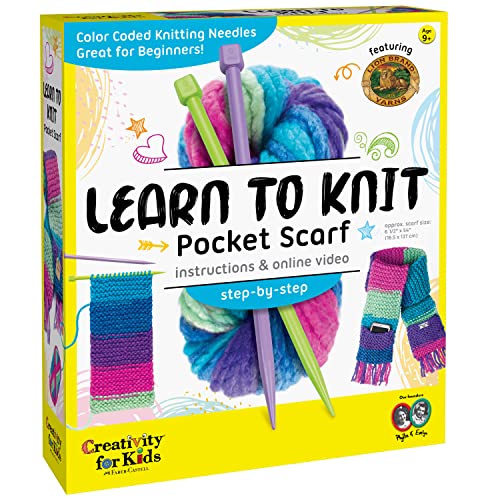
Start with the four basics: casting on, the knit stitch, the purl stitch and binding off. Practice them on a dishcloth or a plain scarf before moving on to anything shaped. A chunky yarn and medium-sized needles are easier to see and hold while you are learning, and if a stitch does drop, a crochet hook is the usual tool for picking it back up, so it is worth keeping one in your bag.
Choosing by Gift Type
Both crafts make good gifts, in different ways. Crochet is a good match for quick gifts such as a hat or a small stuffed toy. Knitting suits the pieces that need a softer, more store-bought drape, such as a baby blanket or a lace shawl. Many people who learn one craft first find the other feels a little different at first, because the fabric is thicker or thinner than they expect, so it is worth giving the second craft a few projects before deciding. Shopping for a knitter? See our gifts for knitters, from interchangeable needle sets to blocking mats.
Frequently Asked Questions
Is knitting or crochet better for anxiety relief?
Both crafts offer anxiety-reducing benefits through repetitive motion and focused attention. Knitting tends to have a more meditative, rhythmic quality that many people find calming. Crochet offers more variety in stitch patterns, which keeps the mind engaged. The best choice for anxiety relief is whichever craft you enjoy more, since you’re more likely to stick with it consistently.
Which uses less yarn, knitting or crochet?
Knitting uses approximately 25 to 35% less yarn than crochet for the same finished dimensions. This is because knit stitches interlock more efficiently, creating a thinner fabric with less yarn per stitch. For large projects like blankets, this difference can mean needing 2 to 3 fewer skeins.
Can left-handed people knit and crochet?
Yes. Both crafts are fully accessible to left-handed people. For knitting, both hands are active regardless, and continental-style knitting (yarn in the left hand) gives the dominant hand more control. For crochet, left-handed crocheters simply mirror the stitch direction. Most YouTube tutorials have left-handed versions available.
Is it easier to follow patterns in knitting or crochet?
Crochet patterns tend to be slightly easier to follow because each stitch is worked independently and completed before moving to the next. Knitting patterns can be more complex because multiple stitches interact across rows. However, both crafts use standardized abbreviations and notation, and pattern reading is a skill that improves with practice in either craft.

Can I teach myself knitting or crochet?
Yes. Free video tutorials cover every basic stitch in both crafts, and many beginner kits include video lessons for their own projects. Pausing and replaying a video is a good way to learn a motion at your own pace. Pairing a video with a simple first project, like a dishcloth or a small swatch, works well.
Can you switch from knitting to crochet mid-project?
Not within the same piece of fabric, no. Knitting and crochet create fundamentally different stitch structures that can’t be seamlessly joined mid-row. However, you can knit one piece and crochet another, then seam them together. You can also use crochet to add edging to a knitted piece, which is a common finishing technique.
What’s the main difference between knitting and crochet for beginners?
The fundamental difference is that knitting uses two needles with multiple active stitches on them at once, while crochet uses a single hook with only one active stitch at a time. This single difference affects everything from how quickly you work to how easy it is to fix mistakes.
Which craft should I learn first if I want to make clothing?
Knitting is generally the better choice for garments because it creates thinner, drapier fabric that looks and feels more natural on the body. Crochet produces thicker, stiffer fabric that works better for blankets and stuffed items like amigurumi.
Is crochet easier to learn than knitting vs crochet comparison shows?
Crochet tends to be slightly easier for beginners because fixing mistakes is simpler with only one live stitch, and you’ll generally work faster per stitch. Knitting requires managing multiple active stitches, which can be more challenging when you’re just starting out.
How much does it cost to start learning knitting versus crochet?
Crochet is slightly more affordable to begin with, costing around $5-10 for a hook and yarn, while knitting requires about $8-15 for needles and yarn. Both are very budget-friendly ways to start a new hobby.
These statements have not been evaluated by the Food and Drug Administration. This information is not intended to diagnose, treat, cure, or prevent any disease. Content is for informational purposes only and is not medical advice; consult a qualified healthcare provider before starting any supplement. As an Amazon Associate we earn from qualifying purchases.
