If you want to know about knitting for anxiety, this guide covers everything you need. If you’ve ever lost an hour to the rhythmic click of needles and looked up feeling noticeably calmer, you’re not imagining things. Knitting for anxiety isn’t just a feel-good claim. It’s a phenomenon backed by a growing body of research connecting repetitive craft activities to measurable reductions in stress, anxiety, and even chronic pain perception.
This isn’t about replacing professional mental health care. It’s about understanding why a simple activity involving yarn and two sticks can become a powerful part of your wellbeing toolkit, and how to get the most benefit from it.
What the Research Says: Knitting For Anxiety
The connection between knitting and anxiety reduction isn’t anecdotal. Multiple studies have investigated the link:
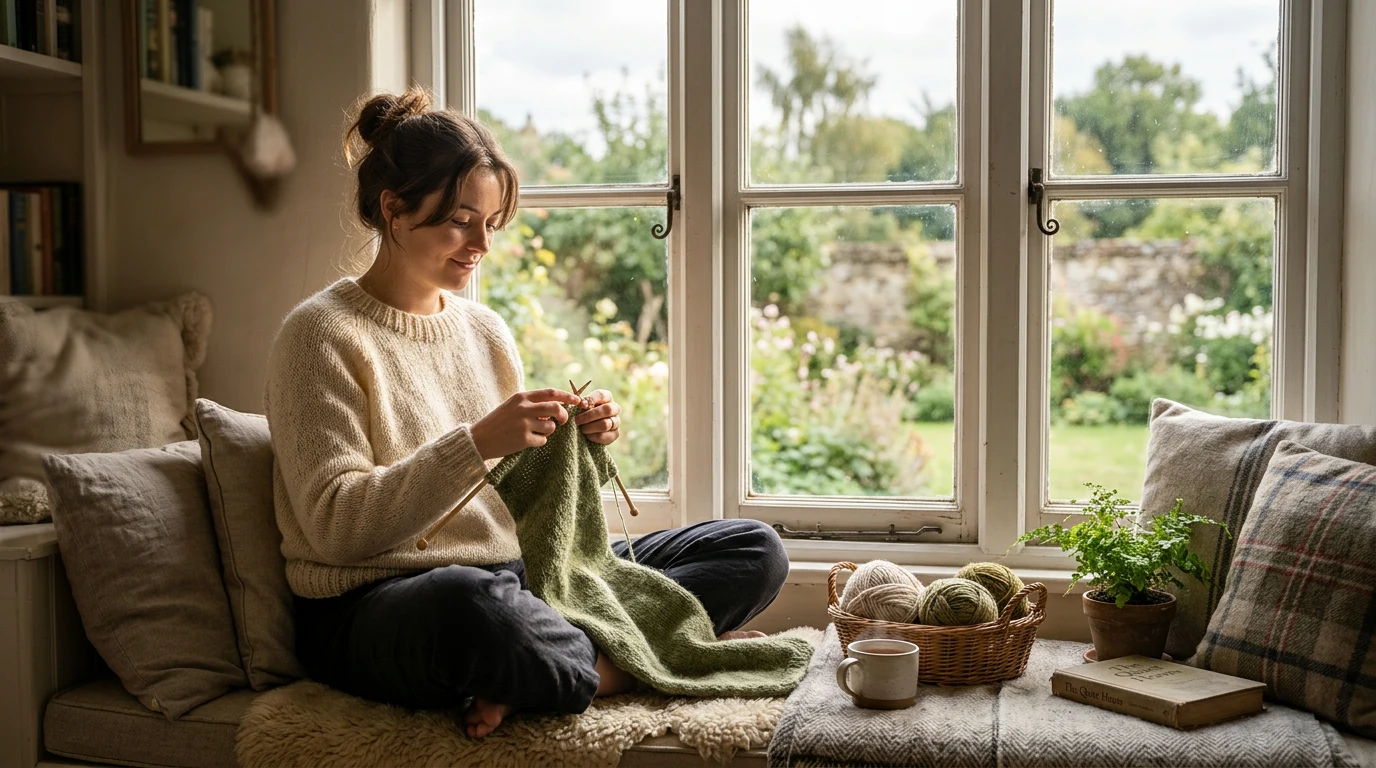
A 2013 survey of over 3,500 knitters published in the British Journal of Occupational Therapy found that 81.5% of respondents with depression reported feeling happy after knitting. More than half reported feeling “very happy.” The frequency of knitting correlated with the degree of mood improvement, with those who knitted more than three times per week reporting the greatest benefits.
A study published in Frontiers in Psychology examined the effects of textile crafts on psychological wellbeing and found that activities like knitting activated a state of “flow,” the psychological state of being fully immersed in an activity. Flow states are associated with reduced anxiety, increased life satisfaction, and lower cortisol levels.
Additional research from the University of British Columbia found that engaging in creative activities like knitting led to increased positive emotions that persisted into the following day, suggesting the benefits extend beyond the knitting session itself.
Why Knitting Calms Anxiety: The Mechanisms
Several overlapping mechanisms explain why knitting has such a consistent calming effect:
Bilateral Rhythmic Movement
Knitting involves coordinated, repetitive movements of both hands. This bilateral stimulation activates both hemispheres of the brain simultaneously, similar to the mechanism behind EMDR (Eye Movement Desensitization and Reprocessing), a therapy used to treat PTSD and anxiety. The rhythmic, cross-body motion has an inherently calming effect on the nervous system.
Focused Attention (Mindfulness)
Counting stitches, following a pattern, and monitoring tension requires enough mental engagement to pull your attention away from anxious thoughts without being so demanding that it adds stress. This is the sweet spot of mindfulness: present-moment awareness without judgment. Your mind can’t simultaneously count stitches and spiral about tomorrow’s meeting. Mastering knitting for anxiety takes practice but delivers great results.
Tactile Soothing
The sensation of soft yarn moving through your fingers activates touch receptors that signal safety to the brain. Humans are wired to find certain textures comforting, and the smooth, repetitive tactile experience of knitting taps into this. The warmth of wood or bamboo needles adds another sensory dimension.
Dopamine from Completion
Every completed row, every finished section, every bound-off project triggers a small release of dopamine, the brain’s reward chemical. Knitting provides frequent, predictable micro-rewards that create a positive feedback loop. This is especially valuable for people with anxiety, who often experience a deficit in their brain’s reward signaling.
Sense of Control
Anxiety often stems from feeling out of control. Knitting is an activity where you have complete control over every aspect: the color, the pattern, the pace, the outcome. In a world that feels chaotic, creating something orderly and beautiful with your own hands is quietly empowering.
Knitting as Moving Meditation
There’s a reason knitting is sometimes called “the new yoga.” Both practices involve rhythmic, repetitive motion paired with focused attention. The difference is accessibility. You can knit on your couch, on the bus, in a waiting room, or in bed. You don’t need a mat, a class, or activewear. You just need yarn and needles.

The meditative quality of knitting is particularly strong with simple, repetitive patterns. Garter stitch (knit every row) and stockinette (alternate knit and purl rows) require just enough attention to maintain focus without mental strain. Many experienced knitters describe entering a trance-like state during repetitive knitting, losing track of time and emerging feeling rested and centered.
- 46 needles wide knitting
- Knits scarves in minutes
- Hand-crank operation
Knitting and the Social Connection Factor
Anxiety often leads to isolation, and isolation worsens anxiety. Knitting naturally creates opportunities for social connection:
- Local knitting groups: Most yarn shops host weekly “knit nights” that are welcoming to all skill levels. The shared activity provides a natural conversation starter and reduces the social pressure of pure socializing.
- Online communities: Ravelry, Reddit’s r/knitting, and Instagram knitting communities offer connection without the pressure of face-to-face interaction, which can be valuable for people with social anxiety.
- Gift-giving: Knitting something for someone else creates a tangible expression of care that strengthens relationships. The act of knitting for another person also provides purpose and motivation during difficult periods.
The social aspect of knitting isn’t optional. Multiple studies have found that the community element amplifies the mental health benefits. Crafting alone is beneficial; crafting in community is more so.
Best Knitting Projects for Anxiety Relief
Not all knitting is equally calming. Here’s what works best:
Most Calming Projects
- Simple scarves: Garter stitch, stockinette, or ribbing. Repetitive, no counting required once established.
- Dishcloths: Small, quick, and useful. The sense of completion comes fast.
- Stockinette blankets: Large projects that provide weeks of meditative knitting in the same simple pattern.
- Hats in the round: The continuous spiral of circular knitting is particularly soothing.
Less Calming (Save for Good Days)
- Complex lace patterns: Require intense concentration that can add frustration on anxious days
- First-time techniques: Learning something new is good for you but not inherently calming
- Projects with deadlines: A Christmas gift due in three days is a stress source, not a stress reliever
Creating a Calming Knitting Practice
To maximize the anxiety-reducing benefits of knitting, consider these approaches: Understanding knitting for anxiety is key to a great craft hobby.
Keep a “Comfort Project” Going
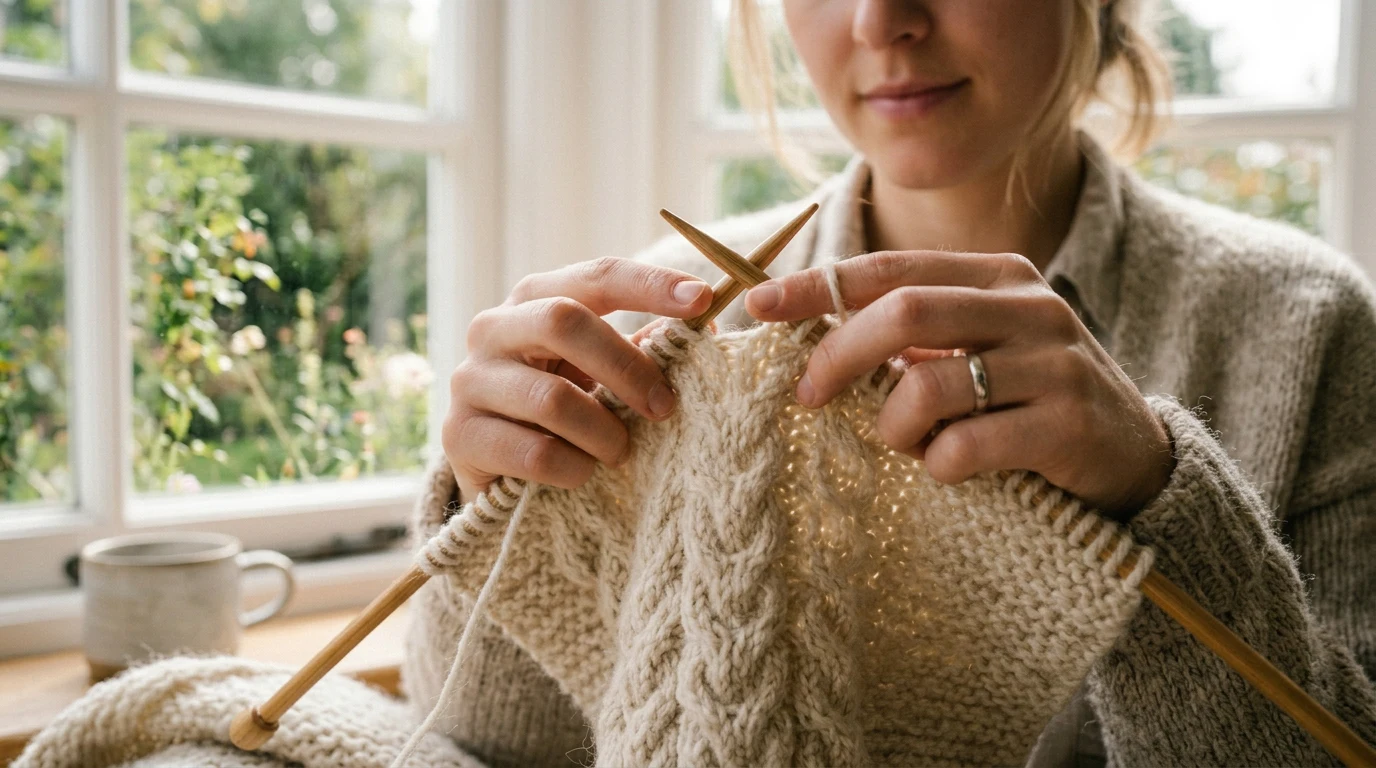
Always have one simple, repetitive project in progress. When anxiety spikes, you can pick it up without any setup, decision-making, or pattern-reading. This should be something like a garter stitch scarf or a stockinette blanket, something so simple that your hands can do it on autopilot while your mind settles.
Choose Your Yarn Intentionally
For anxiety knitting, yarn texture matters more than usual. Choose yarn that feels genuinely pleasant in your hands. Merino wool, baby alpaca, and high-quality acrylic blends all have a softness that enhances the tactile soothing effect. Avoid scratchy yarn or yarn that splits easily, as both create micro-frustrations that counteract the calming benefits.

Create a Knitting Ritual
Pairing knitting with other calming activities creates a powerful routine. Make a cup of tea, settle into a comfortable spot, put on gentle music or a favorite podcast, and knit. Over time, the ritual itself becomes a signal to your nervous system that it’s time to relax.
Don’t Aim for Perfection
Perfectionism and anxiety often travel together. If you find yourself stressed about uneven tension or a missed stitch during what’s supposed to be calming knitting, give yourself explicit permission to let it go. Anxiety knitting isn’t about producing a perfect object. It’s about the process. The thing you’re making is secondary to how you feel while making it.
Knitting for Specific Anxiety Situations
Waiting Rooms and Appointments
A small project in your bag (a sock, a dishcloth, a section of a larger project on circular needles) can transform the anxiety of waiting. Airports, doctor’s offices, and waiting for test results all become more bearable with something productive and soothing to do with your hands.
Evening Wind-Down
Knitting in the evening can replace screen time, which research suggests disrupts sleep through blue light exposure. An hour of knitting before bed provides the same decompression without the sleep-disrupting effects. Many knitters report better sleep quality on nights they knit before bed.
Social Situations
Having something to do with your hands during social gatherings can reduce social anxiety significantly. Knitting in casual social settings (friend groups, family gatherings) gives you a natural focus point and conversation starter while reducing the pressure of constant eye contact and conversation.

- 1.Circular Knitting needles Set: Including 11 pairs knitting needles(size: 3.0mm
- 2.Multiple & Clear Size : Unlike traditional circular needle sets, we provide yo
- 3.Premium Materials knitting set: Aluminum cable needles for knitting made of hi
When Knitting Isn’t Enough
Knitting is a tool, not a treatment. It can be a valuable part of an anxiety management strategy, but it’s not a substitute for professional help when anxiety significantly impacts your daily functioning. If you experience: When it comes to knitting for anxiety, preparation matters most.
- Persistent anxiety that interferes with work, relationships, or sleep
- Panic attacks
- Anxiety that prevents you from doing things you need or want to do
- Physical symptoms (racing heart, difficulty breathing, chronic tension)
Please reach out to a mental health professional. Knitting can complement therapy and medication beautifully, but it works best as part of a broader care plan, not as a replacement for one.

Getting Started: Your Anxiety-Friendly First Project
If you don’t know how to knit yet and you’re drawn to it for the calming benefits, start here:
- Get a pair of US 8 bamboo needles and a skein of soft, light-colored worsted weight yarn
- Learn the knit stitch from a slow YouTube tutorial
- Cast on 35 stitches and knit every row (garter stitch)
- Don’t worry about mistakes. Just knit.
- When you’ve made a swatch or dishcloth, you’ll know whether the rhythm works for you
Most people feel the calming effect within their first or second practice session, even while they’re still fumbling with the basics. The rhythm is the medicine, and you don’t need to be good at it for the rhythm to work.
Frequently Asked Questions
Is there scientific evidence that knitting reduces anxiety?
Yes. Multiple peer-reviewed studies have found that knitting and similar repetitive crafts reduce self-reported anxiety and depression symptoms, lower cortisol (stress hormone) levels, and induce flow states associated with positive emotions. The most cited study, published in the British Journal of Occupational Therapy, surveyed over 3,500 knitters and found significant correlations between knitting frequency and improved mood.
Can knitting help with insomnia caused by anxiety?
Many knitters report improved sleep quality when they knit before bed instead of using screens. The calming effect of repetitive motion, combined with the absence of blue light stimulation, creates favorable conditions for sleep. This is anecdotal evidence supported by the general research on screen-free evening activities and sleep quality.
What if knitting makes me more anxious (because of mistakes)?
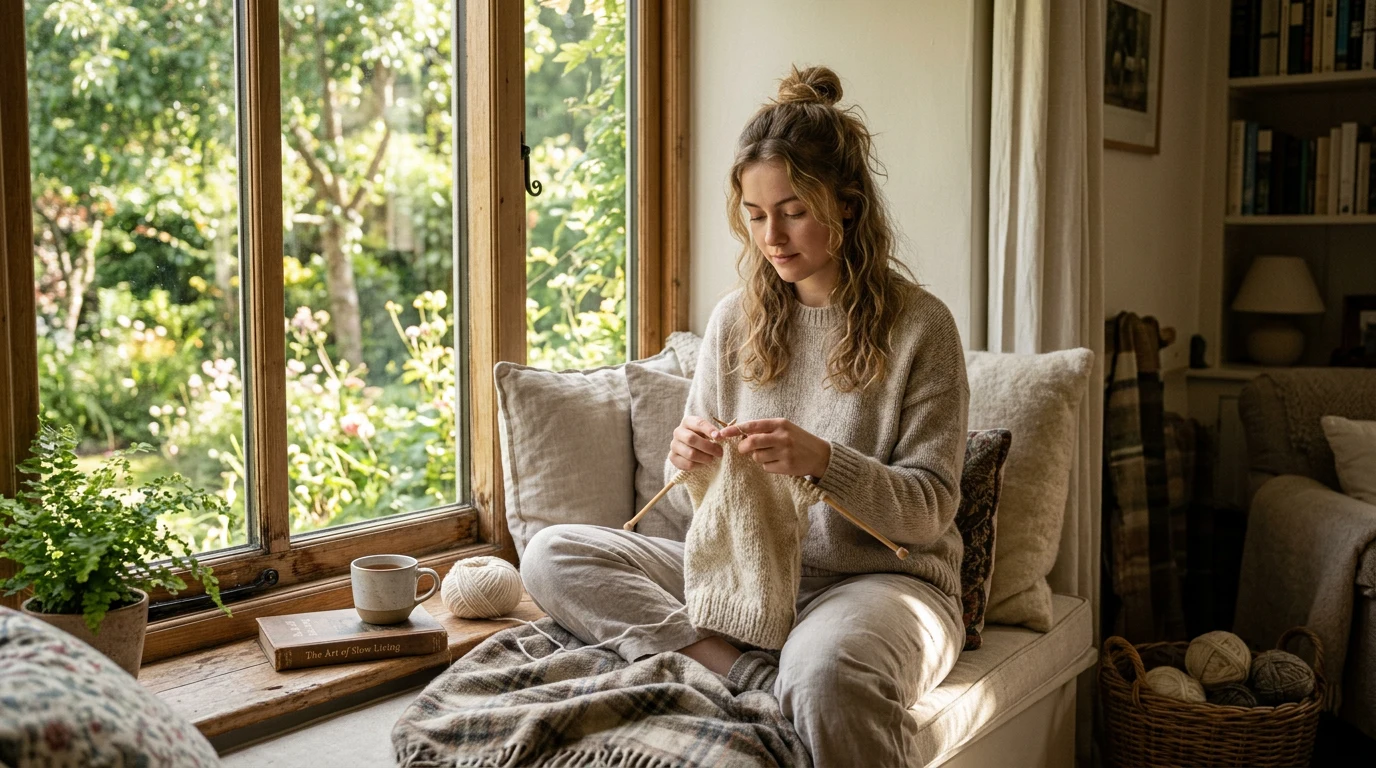
This is common in the early stages. Two strategies help: First, choose projects so simple that mistakes are nearly impossible (garter stitch with a light yarn and medium needles). Second, explicitly reframe your purpose. You’re not knitting to produce something. You’re knitting to calm your nervous system. The product is irrelevant. If a section frustrates you, frog it and start again, or set it down and return later.
How often should I knit to see anxiety benefits?
The research suggests that knitting three or more times per week produces the most consistent mood benefits. However, any frequency helps. Even a single 20-minute session can provide acute anxiety relief. Consistency matters more than duration. A daily 15-minute habit is more beneficial than an occasional three-hour session.
Is crochet equally good for anxiety?
Yes. The research on repetitive crafts and anxiety applies to crochet, embroidery, weaving, and other fiber arts as well. The key ingredients are rhythmic hand movement, focused attention, and tactile engagement, all of which crochet provides. Choose whichever craft you enjoy more, since enjoyment increases the likelihood of maintaining a consistent practice.
Is knitting for anxiety actually supported by science, or is it just a popular trend?
It’s backed by solid research. A 2013 survey of over 3,500 knitters in the British Journal of Occupational Therapy found that 81.5% of people with depression reported feeling happy after knitting, with more than half feeling very happy. Studies also show that knitting activates a state of flow, which reduces anxiety and lowers cortisol levels.
How often do I need to knit to see benefits for my anxiety?
The research shows that frequency matters. Those who knit more than three times per week reported the greatest mood improvements compared to less frequent knitters. Even one session can help, but regular practice appears to give you the best results.
Can knitting really help with chronic pain, or is it just for anxiety?
Knitting can help with both. While this guide focuses on anxiety, research has found measurable reductions in chronic pain perception alongside anxiety relief. The repetitive, meditative nature of knitting addresses both mental and physical stress responses.
Will knitting replace my therapy or medication for anxiety?
No, knitting should not replace professional mental health care or prescribed treatment. Think of it as a powerful tool to add to your wellness toolkit alongside, not instead of, professional support from a doctor or therapist.

These statements have not been evaluated by the Food and Drug Administration. This information is not intended to diagnose, treat, cure, or prevent any disease. Content is for informational purposes only and is not medical advice; consult a qualified healthcare provider before starting any supplement. As an Amazon Associate we earn from qualifying purchases.
