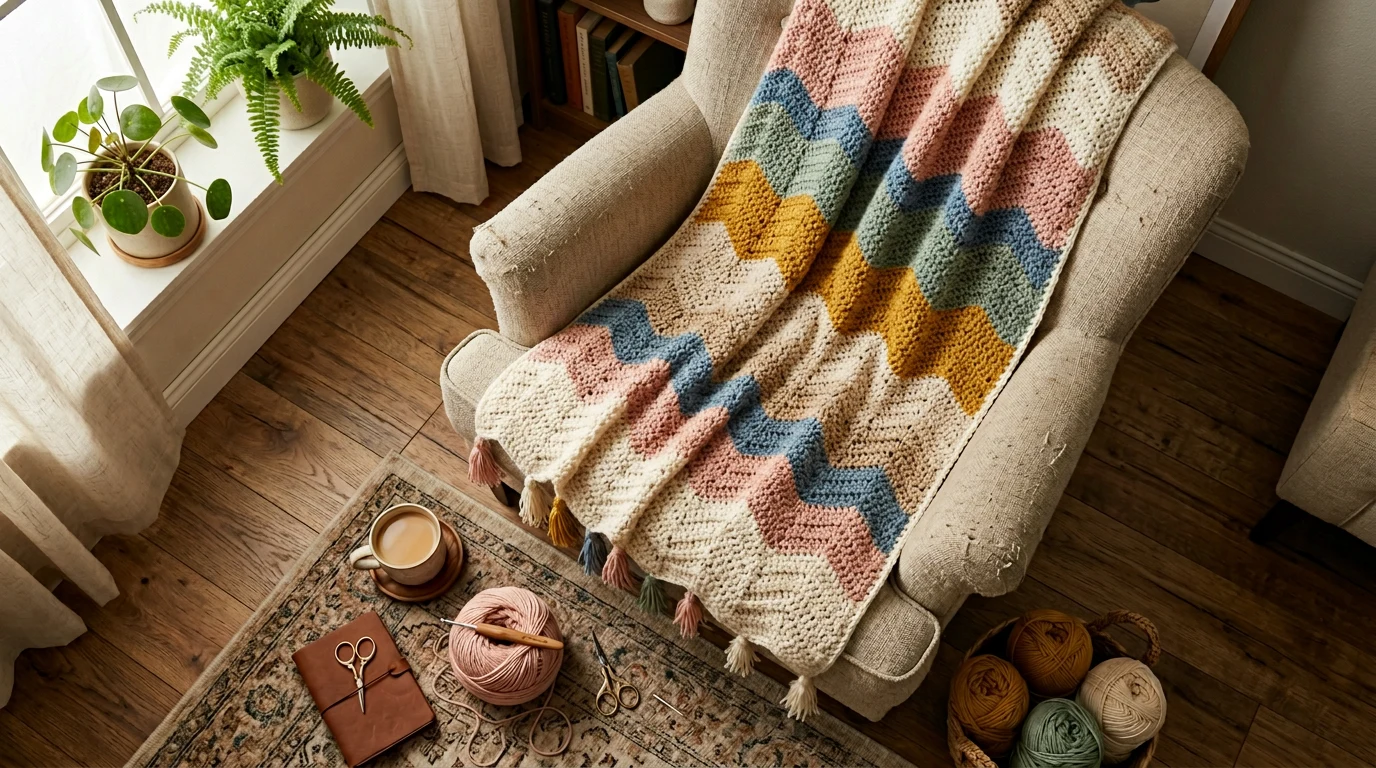
If you want to know about how to crochet a blanket, this guide covers everything you need. Making a blanket is the reason many people pick up a crochet hook in the first place. There’s something deeply satisfying about creating something large, warm, and functional with your own hands. A handmade crochet blanket is the kind of item that people use for decades, pass down through families, and associate with comfort and care in a way that no store-bought throw ever quite manages.
The good news for beginners: a crochet blanket is essentially the same stitch repeated thousands of times. If you can make a straight row, you can make a blanket. The challenge isn’t complexity. It’s patience, planning, and knowing a few tricks that keep your project on track from start to finish.
Choosing Your Blanket Size: How To Crochet A Blanket
Before you buy a single skein of yarn, decide what size blanket you’re making. This determines how much yarn you need, how long the project will take, and what foundation chain to start with.
| Blanket Type | Approximate Size | Yarn Needed (Worsted) | Time Estimate |
|---|---|---|---|
| Baby blanket | 30″ x 36″ | 900 – 1,200 yards | 15 – 25 hours |
| Lap blanket | 36″ x 48″ | 1,500 – 2,000 yards | 25 – 40 hours |
| Throw blanket | 50″ x 60″ | 2,500 – 3,500 yards | 40 – 65 hours |
| Twin bed | 66″ x 90″ | 4,500 – 5,500 yards | 70 – 100 hours |
| Queen bed | 90″ x 100″ | 7,000 – 8,500 yards | 100 – 150 hours |
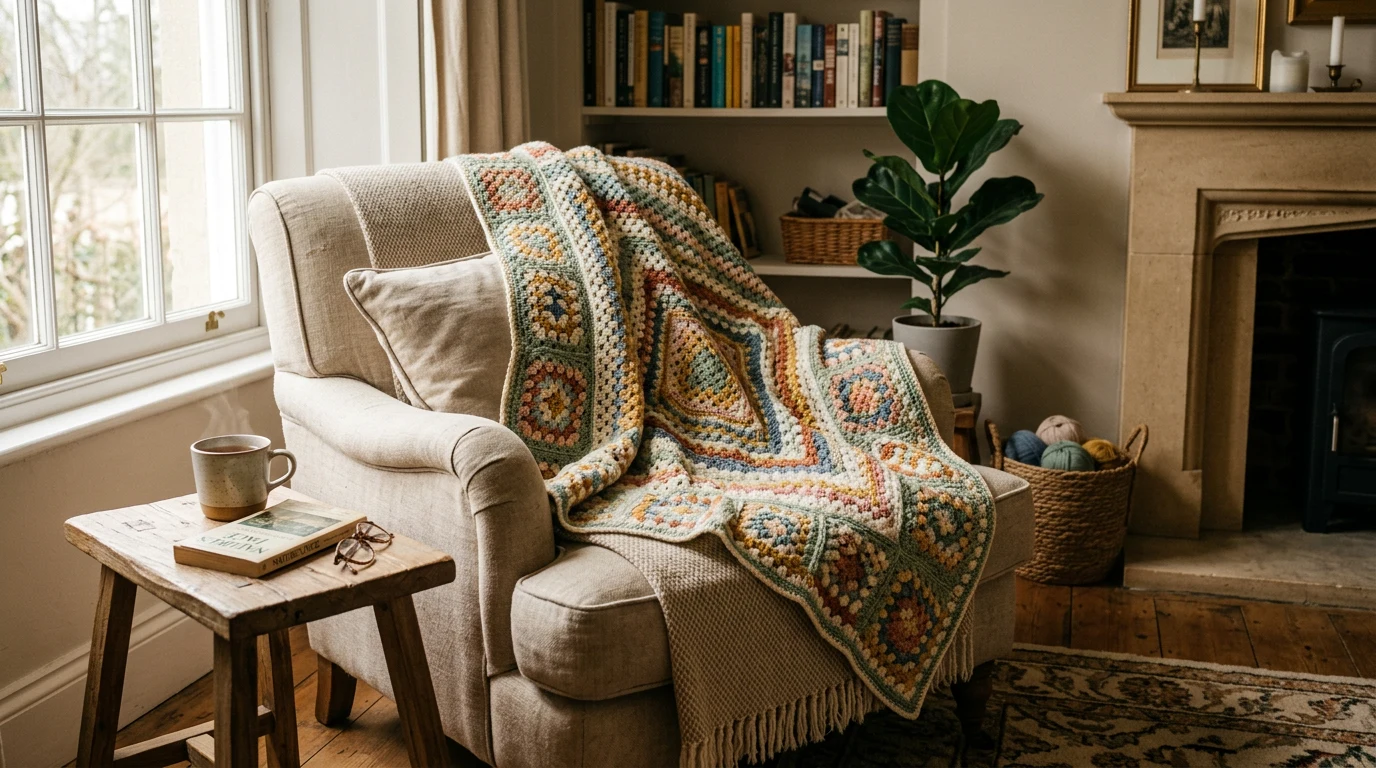
For your first blanket, a baby blanket or lap blanket is the smartest choice. They’re large enough to feel like a real accomplishment but small enough that you’ll actually finish. Many beginners start with a queen-size blanket and abandon it halfway through because the scale becomes overwhelming. Start smaller. You can always make a bigger one next.

Choosing Your Yarn
For a beginner blanket, you want yarn that’s affordable (because you’ll need a lot of it), machine washable (because blankets get dirty), and easy to work with.
Best Yarn Choices for Beginner Blankets
- Worsted-weight acrylic (Red Heart Super Saver, Caron Simply Soft): The standard choice. Affordable, available in many colors, machine washable, and durable. A throw blanket costs roughly $25 to $45 in materials.
- Super bulky chenille (Bernat Blanket): Creates a plush, cozy blanket much faster than worsted weight. More expensive per project but you finish in a fraction of the time.
- Cotton (Lily Sugar’n Cream): Good for lightweight summer blankets. Heavier than acrylic, less stretchy, and more expensive per yard. Best for baby blankets.
How Much Yarn to Buy
Always buy 10 to 15% more yarn than you think you need. Running out of yarn in a specific color or dye lot mid-project is one of the most frustrating things that can happen. Check the dye lot number on every skein and buy them all at the same time. Different dye lots of the same color can look noticeably different when crocheted side by side.
Most craft stores have a generous return policy for unused, unopened skeins. Buy extra and return what you don’t use.
Choosing Your Stitch
For a beginner blanket, you want a stitch that’s simple to repeat, creates an attractive fabric, and doesn’t require counting complex pattern repeats. Here are the three best options.
Option 1: Half Double Crochet (Recommended for First Blanket)
Half double crochet (hdc) is the ideal beginner blanket stitch. It’s taller than single crochet (so you make faster progress) but simpler than double crochet (fewer yarn overs to manage). The fabric it creates is dense enough for warmth, with a subtle texture that looks polished.
The hdc stitch also creates a slightly stretchy, flexible fabric with a nice weight to it. Many experienced crocheters consider it the most underrated stitch for blankets.
Option 2: Double Crochet
Double crochet (dc) is the most common blanket stitch and works up faster than hdc. The fabric is lighter and more open, with a visible V-pattern. It drapes well, making it good for throw blankets. The extra height means fewer rows to reach your target length.
Option 3: Single Crochet
Single crochet (sc) creates the densest, warmest fabric. It’s the simplest stitch, making it the easiest to maintain consistently. The downside is speed: a single crochet blanket takes significantly longer than hdc or dc because each row is shorter. Best for baby blankets or small lap blankets where the dense fabric is a feature.
Pattern 1: Simple Half Double Crochet Blanket
This is the pattern we recommend for your very first blanket. It uses one stitch repeated across every row. Mastering how to crochet a blanket takes practice but delivers great results.
Materials
- Worsted-weight yarn: approximately 1,200 yards for a baby blanket, 2,800 yards for a throw
- 5.5mm (I/9) crochet hook
- Scissors
- Yarn needle
Gauge
14 hdc = 4 inches. 10 rows = 4 inches. (Gauge isn’t critical for blankets, but if your blanket is turning out much larger or smaller than expected, adjust your hook size.)
Instructions
For a baby blanket (approximately 30″ x 36″): Chain 107.
For a throw blanket (approximately 50″ x 60″): Chain 177.
Row 1: Hdc in the 3rd chain from the hook. Hdc in each chain across. (105 hdc for baby / 175 hdc for throw)
Row 2: Ch 2, turn. Hdc in each stitch across. (105 hdc / 175 hdc)

Rows 3 through end: Repeat Row 2 until your blanket measures 36 inches (baby) or 60 inches (throw). For a baby blanket, this will be approximately 90 rows. For a throw, approximately 150 rows.
Finishing: Fasten off. Weave in all ends with a yarn needle.
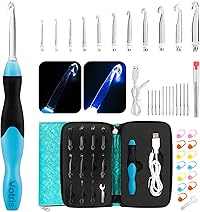
- 【Adjustable Brightness & Comfortable Hold】Enjoy the perfect combination of adjus
- 【Versatile Crochet Kit】Our light up crochet hook kit includes 11 interchangeable
- 【Beginner-Friendly Crochet Kit】Our light up crochet hook kit is specifically des
Pattern 2: Striped Double Crochet Blanket
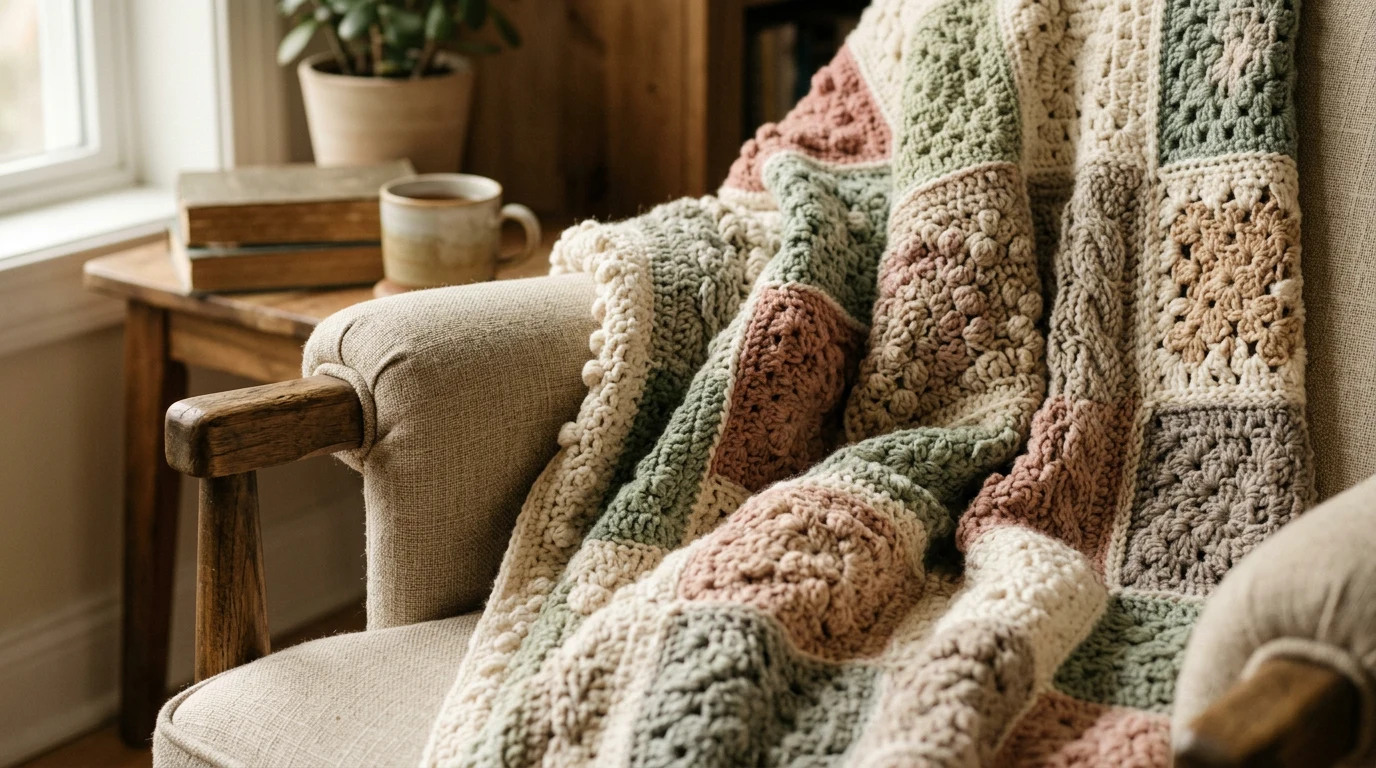
Once you’re comfortable with basic rows, adding stripes is a simple way to create a more visually interesting blanket. This pattern uses the same stitch throughout but alternates colors every 2 or 4 rows.
Materials
- Worsted-weight yarn in 2 to 4 colors (divide your total yardage roughly equally between colors)
- 6.0mm (J/10) crochet hook
- Scissors
- Yarn needle
Instructions
With Color A, chain 152 for a throw blanket.
Row 1: Dc in the 4th chain from the hook. Dc in each chain across. (150 dc)
Rows 2 to 4: Ch 3, turn. Dc in each stitch across. (150 dc)
Row 5 (color change): Switch to Color B. Ch 3, turn. Dc in each stitch across. Understanding how to crochet a blanket is key to a great craft hobby.
Rows 6 to 8: Continue with Color B.
Continue alternating colors every 4 rows until your blanket reaches the desired length.
How to Change Colors
On the last stitch of the row before the color change, work the dc until you have 2 loops left on your hook. Drop the old color and pull the new color through those 2 loops. Chain 3, turn, and continue with the new color. You can carry the unused color up the side edge (securing it every other row by crocheting over it) or cut and rejoin each time.
Pattern 3: Granny Stripe Blanket
The granny stripe is a variation of the granny square worked in rows instead of rounds. It creates a beautiful textured fabric with the characteristic granny square openwork but in a rectangular shape. This is the most visually striking of the three beginner patterns and uses the same cluster-and-chain technique as granny squares. A detailed exploration of stitch patterns for blankets is available from the AllFreeCrochet pattern library.
Materials
- Worsted-weight yarn in 3 to 6 colors
- 5.5mm (I/9) crochet hook
- Scissors
- Yarn needle
Instructions
Foundation: With Color A, chain a multiple of 3 plus 2. (For a throw, try 152: that’s 50 groups of 3, plus 2.)
Row 1: 2 dc in the 4th chain from the hook. *Skip 2 chains, 3 dc in next chain.* Repeat * to * across. (50 clusters of 3 dc)
Row 2: Ch 3, turn. 2 dc in the space between the first and second cluster. *3 dc in the space between the next two clusters.* Repeat * to * across, ending with 3 dc in the turning chain space.
Row 3 onward: Repeat Row 2, changing colors as desired (every 1, 2, or 3 rows).
The trick to this pattern is placing your clusters in the spaces between the clusters of the previous row, not in the stitches themselves. Once you see the rhythm, it moves quickly.
Keeping Your Blanket Straight
The number one issue beginners face with blankets is edges that grow or shrink, turning a rectangle into a trapezoid. Here’s how to prevent that.
Count Your Stitches
Count the stitches at the end of every single row for at least the first 20 rows. If you started with 150 dc, every row should end with 150 dc. If you’re off by even one, find and fix the mistake before continuing. This feels tedious, but it’s the single most effective way to keep your blanket straight.
Mark Your First and Last Stitches
Place a stitch marker in the first stitch and last stitch of every row. This makes them easy to identify and prevents accidentally skipping the edge stitches, which is the most common cause of shrinking blankets. When it comes to how to crochet a blanket, preparation matters most.

Be Consistent with Turning Chains
Decide from the beginning whether your turning chain counts as a stitch or not, and be consistent throughout the entire blanket. If it counts as a stitch, skip the first stitch after turning and work into the top of the turning chain at the end of each row. If it doesn’t count, work into the first stitch after turning and don’t work into the turning chain at the end.
Adding a Border
A border frames your blanket and gives it a polished, finished look. It also hides any slight unevenness along the edges. Here’s a simple border that works with any blanket pattern.
Simple Single Crochet Border
- Join your border yarn in any corner with a slip stitch.
- Ch 1. Work 3 sc in the corner stitch.
- Sc evenly along the edge (for row edges, aim for roughly 1 sc per row for sc/hdc blankets, or 2 sc per dc row).
- At the next corner, work 3 sc.
- Continue around all four sides.
- Slip stitch to the first sc to join the round.
- For a wider border, repeat for 2 to 3 rounds.
If the border is ruffling (wavy), you have too many stitches. Skip a stitch every few inches. If it’s pulling in (curling), you need more stitches. Add an extra sc every few inches.
- Winds up to 10oz balls
- Adjustable swift included
- Heavy-duty clamp base
Finishing and Care
Weaving in Ends
Every time you start a new skein or change colors, you’ll have yarn tails to weave in. Use a yarn needle to weave each tail through 2 to 3 inches of stitches on the wrong side, then double back in the opposite direction. Trim the excess. This takes time, especially on striped blankets, but skipping it means tails will poke out and potentially unravel.
Blocking
Blocking a blanket means wetting it and laying it flat to dry in the shape you want. For acrylic blankets, a machine wash on gentle followed by laying flat to dry works well. For a more dramatic effect, pin the damp blanket to a flat surface (a bed or clean floor) and let it dry completely. Blocking evens out your stitches, straightens edges, and makes the blanket lie flat.
Washing
Acrylic blankets are machine washable. Use cool or warm water and a gentle cycle. Tumble dry on low or lay flat to dry. Avoid high heat, which can make acrylic feel stiff. Cotton blankets can be machine washed on warm. Wool blankets need hand washing or a wool cycle in cold water with wool-safe detergent.
Staying Motivated on a Long Project
A blanket is a marathon, not a sprint. Here are tips from experienced blanket makers for staying motivated:
- Set a daily goal. “I’ll do 5 rows today” is more manageable than “I’ll finish the blanket this week.”
- Measure your progress. Mark your current length on a piece of paper. Watching the inches add up is motivating.
- Crochet while doing something else. Listen to podcasts, audiobooks, or music. Watch TV (once your stitch is automatic). Blanket crochet becomes meditative background activity.
- Take breaks between sections. Make a small project (a dishcloth, a hat) between blanket sessions to break up the repetition.
- Remember your “why.” Visualize the finished blanket on your couch, on a loved one’s bed, or wrapped around someone you care about. That image will carry you through the middle-project slump.
Frequently Asked Questions
How long does it take a beginner to crochet a blanket?
A baby blanket in worsted-weight yarn typically takes 15 to 25 hours of crochet time for a beginner. A throw blanket takes 40 to 65 hours. Spread over a few weeks of regular crafting (an hour or two per day), a baby blanket can be finished in 2 to 3 weeks, and a throw in 1 to 2 months. Super bulky yarns like Bernat Blanket can cut these times roughly in half.
What is the easiest crochet blanket pattern for a beginner?
A simple half double crochet or double crochet blanket worked in rows with a single color is the easiest starting point. Every row is identical, so once you learn the stitch, you can work almost on autopilot. The hardest part is maintaining consistent stitch counts at the edges, which stitch markers and counting solve.
How do I calculate how much yarn I need for a blanket?
Make a gauge swatch (a 6-inch square) with your yarn and hook. Measure how many stitches and rows per inch. Then multiply: (stitches per inch x blanket width) x (rows per inch x blanket length) gives you total stitches. Divide by the stitches per yard for your yarn. Or use the yardage estimates in our size chart above and add 15% for safety. When in doubt, buy an extra skein.
Can I use different yarn brands in the same blanket?
Yes, as long as the yarns are the same weight category and your gauge stays consistent. Mixing brands is common, especially for scrappy or multi-color blankets. The main concern is that different brands may have slightly different textures or thicknesses even within the same weight category. A gauge swatch with each yarn helps ensure consistency.
Should I wash my blanket before giving it as a gift?
For acrylic blankets, washing before gifting is recommended. The wash cycle softens the yarn (especially firmer brands like Red Heart Super Saver), evens out the stitches, and removes any oils or dust from the crafting process. Include a care tag or note with washing instructions so the recipient knows how to maintain it.
What size blanket should I make if I’m just learning how to crochet a blanket?
For your first project, choose a baby blanket (30″ x 36″) or lap blanket (36″ x 48″). These sizes are large enough to feel like a real accomplishment but small enough that you’ll actually finish without becoming overwhelmed, unlike larger projects that many beginners abandon halfway through.
How long does it take to crochet a blanket as a beginner?
A baby blanket typically takes 15 to 25 hours to complete, while a lap blanket takes 25 to 40 hours. Your actual time will depend on your speed, how frequently you work on the project, and your experience level with the basic stitches.
What type of yarn is best for making my first crochet blanket?
Choose worsted-weight acrylic yarn that is affordable, machine washable, and easy to work with. Acrylic is ideal for beginners because it’s budget-friendly (since blankets require a lot of yarn), durable, and simple to handle as you’re learning.
Is crochet blanket making difficult for someone who has never crocheted before?
No, crochet blanket making is perfect for beginners because it essentially involves repeating the same stitch thousands of times. If you can make a straight row, you can make a blanket; the real challenge is patience and planning rather than complexity.

These statements have not been evaluated by the Food and Drug Administration. This information is not intended to diagnose, treat, cure, or prevent any disease. Content is for informational purposes only and is not medical advice; consult a qualified healthcare provider before starting any supplement. As an Amazon Associate we earn from qualifying purchases.
