One of the first decisions you will face after assembling your quilt top is how to quilt the layers together. Machine quilting offers speed and consistency. Hand quilting offers a traditional look and meditative process. Both methods produce beautiful, durable quilts, but they suit different situations, personality types, and project goals.
This guide compares both methods honestly so you can choose the approach that makes the most sense for your quilting journey.
Our reviews are based on aggregated verified buyer feedback, manufacturer specifications, and published expert opinion. Products are not independently tested by our team.
Machine Quilting Overview
Machine quilting uses your sewing machine to stitch through all three layers of the quilt sandwich. There are two main approaches: walking foot quilting for straight lines and gentle curves, and free-motion quilting for complex designs like stippling, feathers, and custom patterns.
Walking Foot Quilting
A walking foot is a special presser foot that feeds all layers evenly through the machine. It is the easiest machine quilting method for beginners. You can quilt straight lines, grids, diagonal patterns, gently curved lines, and stitch in the ditch (sewing in the seam lines). The walking foot does the hard work of keeping the layers aligned while you guide the fabric.
Free-Motion Quilting
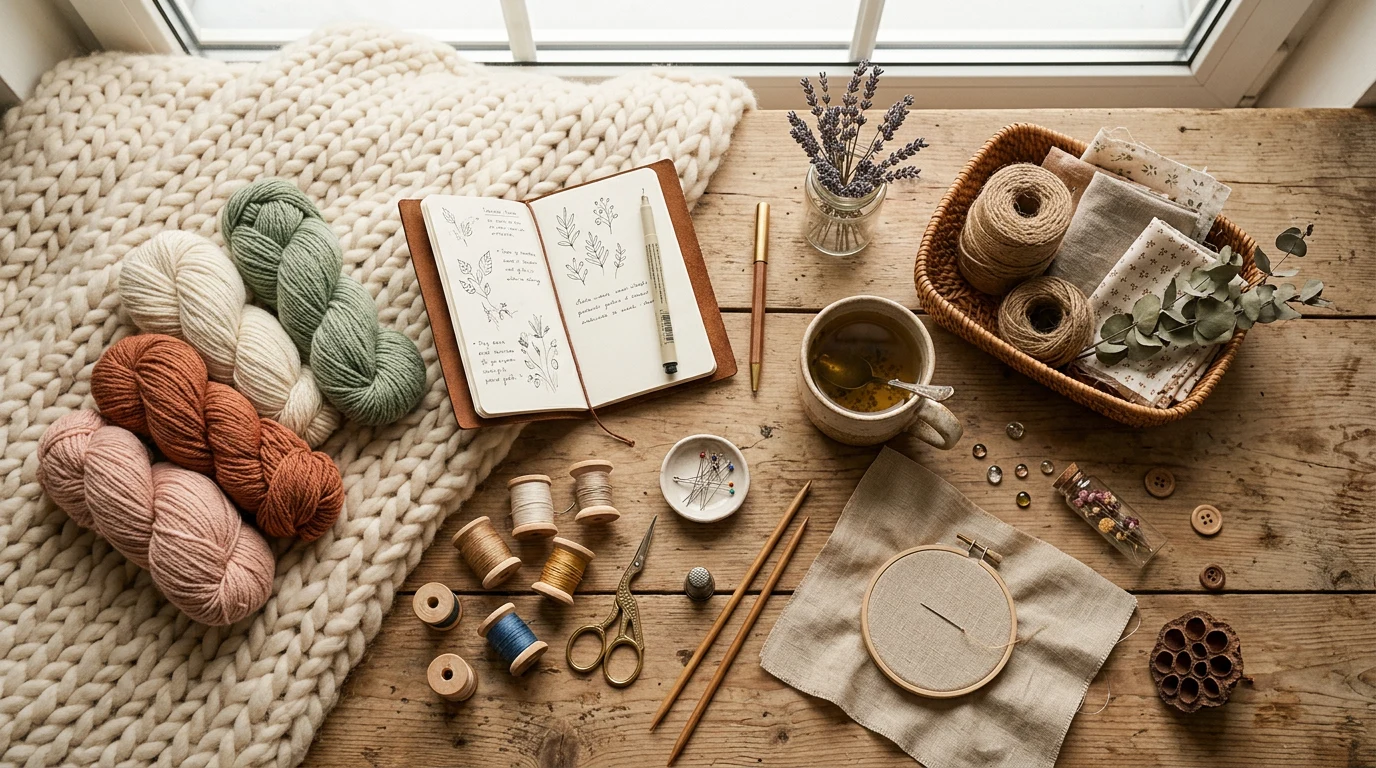
Free-motion quilting drops the feed dogs so you can move the fabric freely in any direction. This allows you to create intricate designs like stippling, loops, pebbles, feathers, and custom motifs. It requires practice to develop consistent stitch length and smooth curves, but the creative possibilities are enormous. A darning or free-motion presser foot is required for this technique.
Hand Quilting Overview
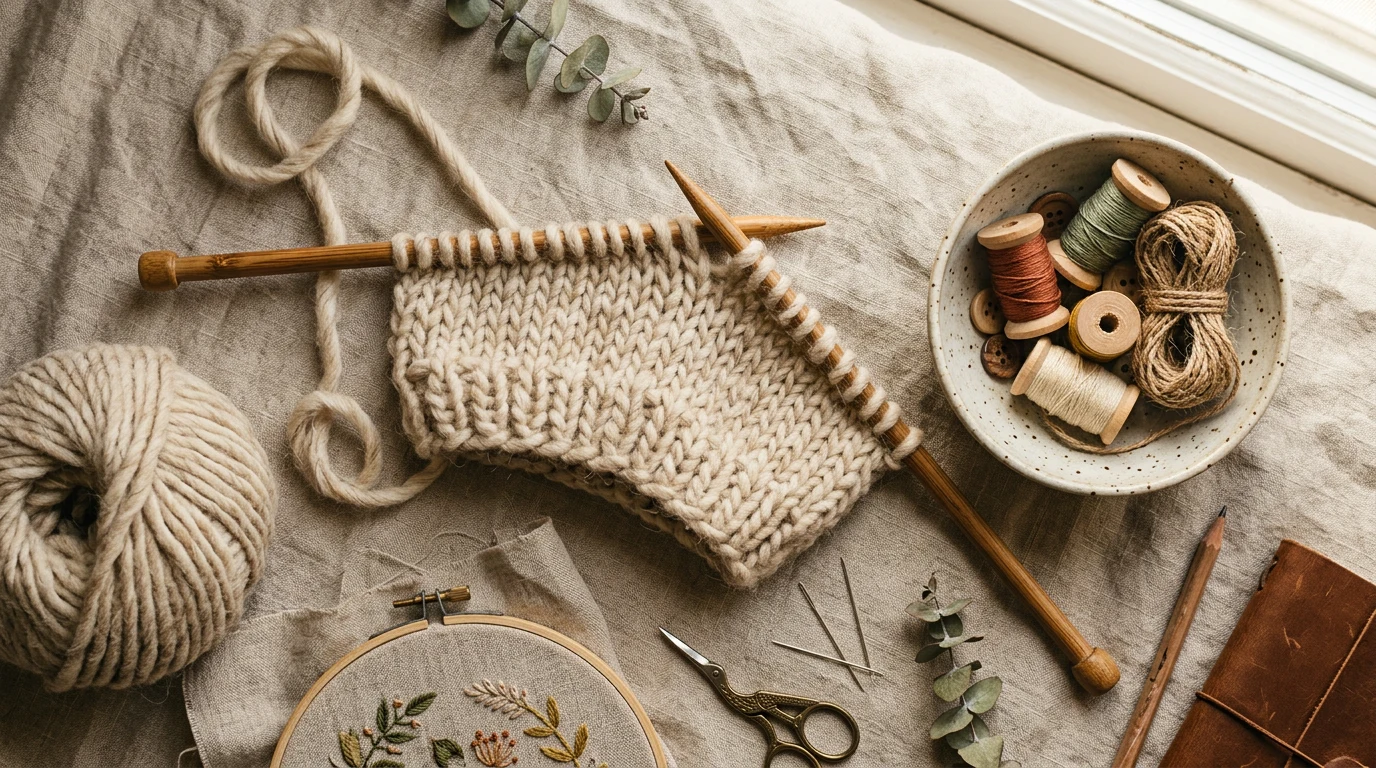
Hand quilting uses a needle and thread to create small, even running stitches through all three quilt layers. The stitching is done in a quilting hoop or frame that holds the layers taut. Hand quilting has been practiced for centuries and produces a distinctive texture that is different from machine quilting.
The Process
Place the basted quilt in a quilting hoop or frame. Thread a betweens needle with hand quilting thread and make small, even running stitches through all three layers. Most hand quilters use a rocking motion: push the needle down through the layers with a thimble on your top hand, feel the needle point with your underneath hand, then rock the needle back up. This creates the small, even stitches that characterize hand quilting.
The Stitch
Hand quilting stitches create a visible line of small dashes on both the front and back of the quilt. Beginners typically achieve 6 to 8 stitches per inch, while experienced hand quilters may reach 10 to 12 stitches per inch. Evenness matters more than size. Consistent 7-stitch-per-inch quilting looks far better than uneven 10-stitch-per-inch quilting.
Speed and Efficiency Comparison
This is the most dramatic difference between the two methods.
| Project Size | Machine Quilting Time | Hand Quilting Time |
|---|---|---|
| Baby quilt | 2-4 hours | 40-80 hours |
| Lap quilt | 4-8 hours | 100-200 hours |
| Twin quilt | 6-12 hours | 200-400 hours |
| Queen quilt | 10-20 hours | 400-800+ hours |
Machine quilting is dramatically faster. If you want to finish quilts quickly and move on to new projects, machine quilting is the practical choice. If you enjoy the process as much as the product and view quilting as a meditative practice rather than a race to the finish, hand quilting’s slower pace is actually part of the appeal.
Stitch Quality and Appearance
Machine quilting and hand quilting produce distinctly different looks.
Machine quilting creates a continuous line of interlocked stitches. The stitches are uniform in size and can be very dense or widely spaced depending on the design. Machine quilting allows for extremely intricate designs that would be impractical by hand, like dense stippling, detailed feathers, and custom pictorial motifs. The stitches sit on the surface of the fabric and create a defined line.
Hand quilting creates a line of discrete running stitches that show as small dashes separated by gaps. This gives a softer, more organic look with a subtle texture. Hand quilting stitches sink into the fabric slightly, creating gentle dimples that give the quilt a characteristic puffiness between stitching lines. Many quilters and quilt judges consider hand quilting stitches to have more character and warmth than machine stitches.
Neither is objectively better. They are different aesthetics, and your preference is personal.
Equipment Needed for Each Method
Machine Quilting Equipment
- Sewing machine (any machine that sews a straight stitch)
- Walking foot ($20-$45)
- Free-motion foot ($10-$30, optional for beginners)
- Machine quilting thread
- Quilting gloves ($8-$15, for gripping the quilt during free-motion)
- Safety pins or basting spray for basting
Hand Quilting Equipment
- Quilting hoop (14-inch, $15-$30) or quilting frame ($50-$500+)
- Betweens needles, size 8-10 ($3-$5)
- Hand quilting thread ($5-$8 per spool)
- Thimble ($3-$15)
- Marking tool for quilting design ($3-$8)
- Thread snips ($3-$5)
Both methods require basting the quilt layers first. Machine quilters typically use safety pins, while hand quilters often baste with long running stitches. For a full supply list, check our essential quilting tools guide.
Cost Comparison
Hand quilting has a lower startup cost if you already have a sewing machine for piecing. A quilting hoop, needles, thimble, and thread total about $30 to $50. Machine quilting accessories (walking foot, free-motion foot, quilting gloves) total about $40 to $80.
The ongoing costs are similar. Thread is the main consumable for both methods. Hand quilting uses less thread per project because the stitches are farther apart than machine stitching. However, the time cost of hand quilting is significant. If you value your time, machine quilting is more cost-effective per quilt completed.
A third option worth mentioning is hiring a longarm quilter to machine quilt your quilt tops. Longarm quilting services typically charge $0.015 to $0.04 per square inch, so a lap quilt might cost $50 to $130 for professional quilting. This is an excellent option if you enjoy piecing but not the quilting step.
Which Is Better for Beginners?
Machine quilting with a walking foot is the most beginner-friendly option. Straight-line quilting produces beautiful results with minimal practice, and you can complete a quilt quickly enough to maintain momentum and excitement. There is nothing more motivating than finishing your first quilt and immediately wanting to start another.
Hand quilting is accessible to beginners too, but the time commitment can be discouraging for a first project. Many quilters recommend completing two or three quilts with machine quilting before trying hand quilting so you have a sense of the full quilting process and can focus specifically on the hand stitching technique without it being your first everything.
That said, if the idea of hand quilting in front of the television on a cozy evening appeals to you more than sitting at a sewing machine, start there. The best quilting method is the one that brings you joy. As the Quilt Alliance notes, quilting traditions thrive when people connect with the method that feels most meaningful to them.
When to Use Each Method
| Situation | Best Method | Why |
|---|---|---|
| Baby quilt gift needed in 2 weeks | Machine | Speed |
| Heirloom quilt for a special occasion | Hand | Traditional look, personal touch |
| First quilt ever | Machine (walking foot) | Simplest, fastest results |
| Relaxation project, no deadline | Hand | Meditative process |
| Dense, intricate quilting design | Machine (free-motion) | Practical for tight designs |
| Utility quilt for everyday use | Machine | Durability, speed |
| Art quilt for display | Either | Depends on desired aesthetic |
| Portable project for travel | Hand | No equipment needed beyond a hoop |
Many experienced quilters use both methods depending on the project. Machine quilting for practical quilts and gifts, hand quilting for special projects and relaxation. You do not have to choose one exclusively. For more about getting started with your first quilting project, visit our complete beginner’s guide.
Tips for Machine Quilting Success
If you choose machine quilting for your first project, these tips will help you achieve the best results.
Practice on a sample sandwich first. Make a small quilt sandwich from scrap fabric and batting. Practice your quilting design on this sample before working on your actual quilt. This lets you adjust tension, speed, and technique without risking your real project.
Start from the center and work outward. This prevents the layers from shifting and creating puckers in the center of the quilt. Quilt the center seams first, then work toward the edges progressively.
Use quilting gloves. Rubberized quilting gloves (around $8 to $15) give you a better grip on the quilt surface, especially during free-motion quilting. They make maneuvering the quilt dramatically easier and reduce hand fatigue during long quilting sessions.
Roll the quilt for large projects. When quilting on a domestic machine, roll the right side of the quilt tightly to fit through the throat space. Secure the roll with quilt clips or bicycle clips to keep it from unrolling while you sew. Reroll as you move across the quilt.
Tips for Hand Quilting Success
If the meditative process of hand quilting appeals to you, these tips help you build strong skills from the beginning.
Start with a small project. A pillow cover or pot holder lets you practice hand quilting stitches without committing to the hundreds of hours a full quilt requires. Once your stitches are consistent, move to a larger project with confidence.
Keep your thread short. Cut hand quilting thread in 18-inch lengths. Longer threads tangle, develop knots, and weaken from being pulled through fabric repeatedly. Rethreading more often is a minor inconvenience compared to fighting tangled thread.
Focus on even stitches, not small stitches. Beginners often try to make tiny stitches immediately, which leads to uneven, frustrated stitching. Instead, focus on making stitches the same size and evenly spaced. Your stitches will naturally get smaller as your technique improves over weeks and months of practice.
Protect your fingers. Use a thimble on your pushing finger and consider a finger guard or adhesive bandage on the finger underneath the quilt that catches the needle. Hand quilting without finger protection leads to sore, punctured fingertips that make you want to stop before you have had a chance to develop the skill.
Frequently Asked Questions
Is hand quilting stronger than machine quilting?
Machine quilting is generally stronger because the interlocking stitch creates a continuous bond between the layers. Hand quilting uses a running stitch that can pull out if a single thread breaks. However, both methods produce quilts that hold up well to regular use and washing for decades when done properly.
Can I combine machine and hand quilting on the same quilt?
Absolutely, and many quilters do. A common approach is to machine quilt the basic structure (stitch in the ditch along major seam lines) for stability, then add hand quilting as decorative detail in selected areas. This gives you the speed of machine quilting with the character of hand quilting.
Do I need a special machine for machine quilting?
No. Any sewing machine that sews a straight stitch can be used for machine quilting. A walking foot and the ability to drop feed dogs are helpful features. Dedicated quilting machines with larger throat space make the process easier for bigger quilts, but they are not required. See our quilting machine guide for recommendations at every budget.
How do I improve my hand quilting stitches?
Practice, practice, practice. Make a small practice sandwich from scrap fabric and batting and quilt on it for 15 minutes a day. Focus on even stitches before worrying about small stitches. Your stitch size will naturally decrease as your technique improves. Using the proper needle (betweens size 8-10) and a thimble makes a significant difference in your control and comfort.
Frequently Asked Questions
What’s the main difference between machine quilting and hand quilting?
Machine quilting uses your sewing machine to stitch through all three quilt layers quickly and consistently, while hand quilting uses a needle and thread for a traditional, meditative approach. Both methods create beautiful, durable quilts, but they suit different personality types and project goals.
Is machine quilting or hand quilting better for beginners?
Machine quilting with a walking foot is generally easier for beginners because the presser foot keeps all layers aligned while you guide the fabric. Hand quilting requires more practice and patience, but some beginners prefer it for the meditative, relaxing process.
Can I create complex designs with machine quilting?
Yes, free-motion machine quilting allows you to create intricate designs like stippling, feathers, pebbles, and custom patterns by moving the fabric freely under the needle. This technique requires practice to develop consistent stitches, but it offers enormous creative possibilities once you master it.
How long does it take to complete a quilt with machine quilting versus hand quilting?
Machine quilting is significantly faster than hand quilting, making it ideal if you want to finish projects quickly. Hand quilting takes much longer but offers a traditional look and a slower, more meditative creative process that many quilters find rewarding.