If you want to know about modern embroidery patterns, this guide covers everything you need. Embroidery has changed. The doily-and-roses image that might come to mind when you hear the word is only a small slice of what embroiderers are creating today. Modern embroidery patterns embrace everything from minimalist line art and abstract landscapes to pop culture references and bold typography. If you have ever scrolled past a stunning piece of hoop art on Instagram and thought “I want to make that,” modern embroidery patterns are your starting point.
This guide explores the styles, trends, and resources that define modern embroidery in 2026. Whether you are looking for your next project or just discovering what is possible with needle and thread, you will find plenty of inspiration here.
What Makes Embroidery “Modern”?
Modern embroidery is less about specific techniques and more about aesthetic sensibility. Traditional embroidery tends toward symmetrical, repeating motifs with a focus on precision and historical pattern reproduction. Modern embroidery borrows the same stitches but applies them to contemporary subject matter, minimalist design principles, and personal expression.
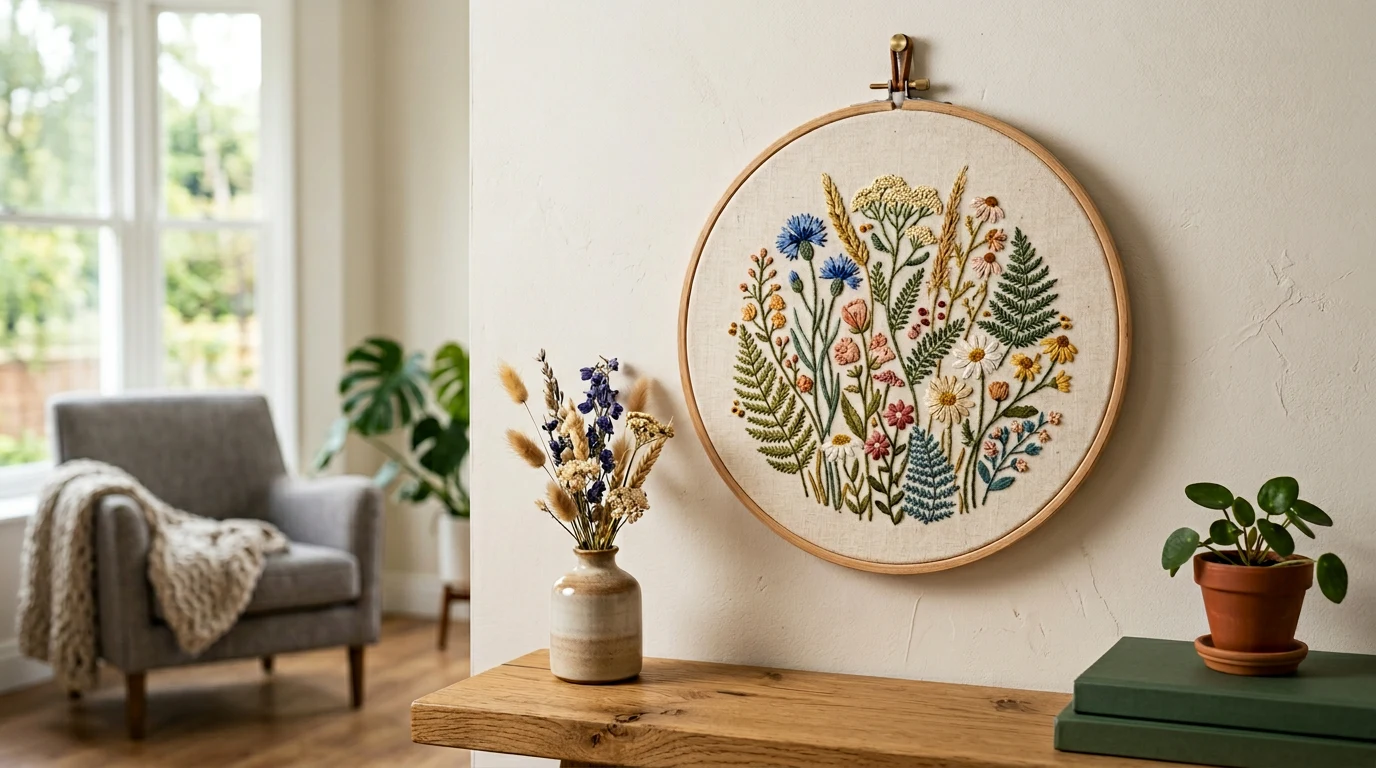
Think of it this way: the stitches are the same toolkit that embroiderers have used for centuries. What has changed is what people choose to stitch and how they compose their designs. A satin stitch is still a satin stitch, but filling in a portrait of your cat, a mountain range, or an abstract color gradient with it feels very different from filling in a Victorian rose pattern.
Key characteristics of modern embroidery include asymmetrical compositions, negative space as a design element, unconventional color palettes, mixed media (combining embroidery with painting, photography, or fabric collage), and subject matter drawn from everyday life rather than historical tradition.
Popular Modern Embroidery Styles in 2026
Minimalist Botanicals
Minimalist botanical patterns are arguably the most popular style in modern embroidery right now. These designs feature simplified plant forms: a single stem with a few leaves, a wildflower outline, or a branch with berries, stitched with clean lines and lots of negative space.
The appeal is both aesthetic and practical. These patterns look sophisticated and contemporary, they work beautifully in small hoops, and they are genuinely achievable for beginners. A minimalist botanical typically uses just two or three stitches (stem stitch, satin stitch, and maybe French knots) and can be completed in a few hours.
Color palettes tend toward muted, earthy tones: sage green, dusty rose, terracotta, and cream. The finished pieces look right at home as gallery wall accents in modern apartments.
Continuous Line Art
Inspired by single-line drawings (the kind you can trace without lifting your pen), continuous line embroidery uses a single thread path to create faces, figures, animals, or objects. The result looks like a sketch translated into thread, with a casual, artistic quality that feels spontaneous even though it is carefully planned.
Back stitch is the primary technique here, and many designs can be completed in a single sitting. The challenge is in the design rather than the stitching, making this style great for intermediate embroiderers who want to push their creative skills. Mastering modern embroidery patterns takes practice but delivers great results.
Abstract and Geometric
Abstract embroidery treats the hoop as a canvas for non-representational art. Geometric shapes, color blocks, gradient fills, and textural experiments create pieces that function as fiber art rather than traditional needlework. Some artists combine multiple thread types, beads, and unconventional materials for maximum visual impact.
This style gives embroiderers enormous creative freedom but requires a good eye for color and composition. Long-and-short stitch, satin stitch, and French knots are common, often used in unexpected ways to create depth and movement.
Landscape Embroidery
Landscape embroidery transforms the hoop into a tiny window onto a scene: mountains at sunset, a field of wildflowers, ocean waves, or a starry night sky. These patterns use long-and-short stitch and thread painting techniques to blend colors smoothly, creating pieces that look almost like miniature paintings from a distance.
Landscape patterns are more advanced than minimalist designs, requiring color blending skills and patience. However, the results are genuinely stunning, and many embroiderers consider their first landscape piece a milestone achievement.
Typography and Lettering
Embroidered text has been around for centuries, but modern lettering embroidery has a distinctly contemporary edge. Quotes, song lyrics, personal mantras, and even playfully sarcastic phrases are stitched in various typography styles, from elegant script to bold block letters to hand-lettered casual fonts.

Combining text with small illustrative elements (a word surrounded by florals, a phrase with decorative borders) creates personalized pieces that make meaningful gifts. Back stitch, split stitch, and satin stitch are the primary techniques for most lettering work.
Stumpwork (3D Embroidery)
Stumpwork takes embroidery off the flat surface by creating dimensional elements that stand up from the fabric. Flowers with petals that lift away from the background, insects with padded bodies and wire-stiffened wings, and sculptural botanical forms bring a tactile, almost whimsical quality to embroidery.
This technique is more advanced, involving wire shaping, padding, and detached stitches worked over a base layer. The results are show-stopping, and stumpwork kits designed for adventurous beginners have become increasingly popular.
Where to Find Modern Embroidery Patterns
Etsy
Etsy remains the largest marketplace for independent embroidery pattern designers. You can find thousands of downloadable PDF patterns across every style, from minimalist to maximalist. Prices typically range from $3 to $15 for a digital pattern. Many sellers include stitch guides and color charts alongside the pattern, making them accessible even if you are relatively new to embroidery.
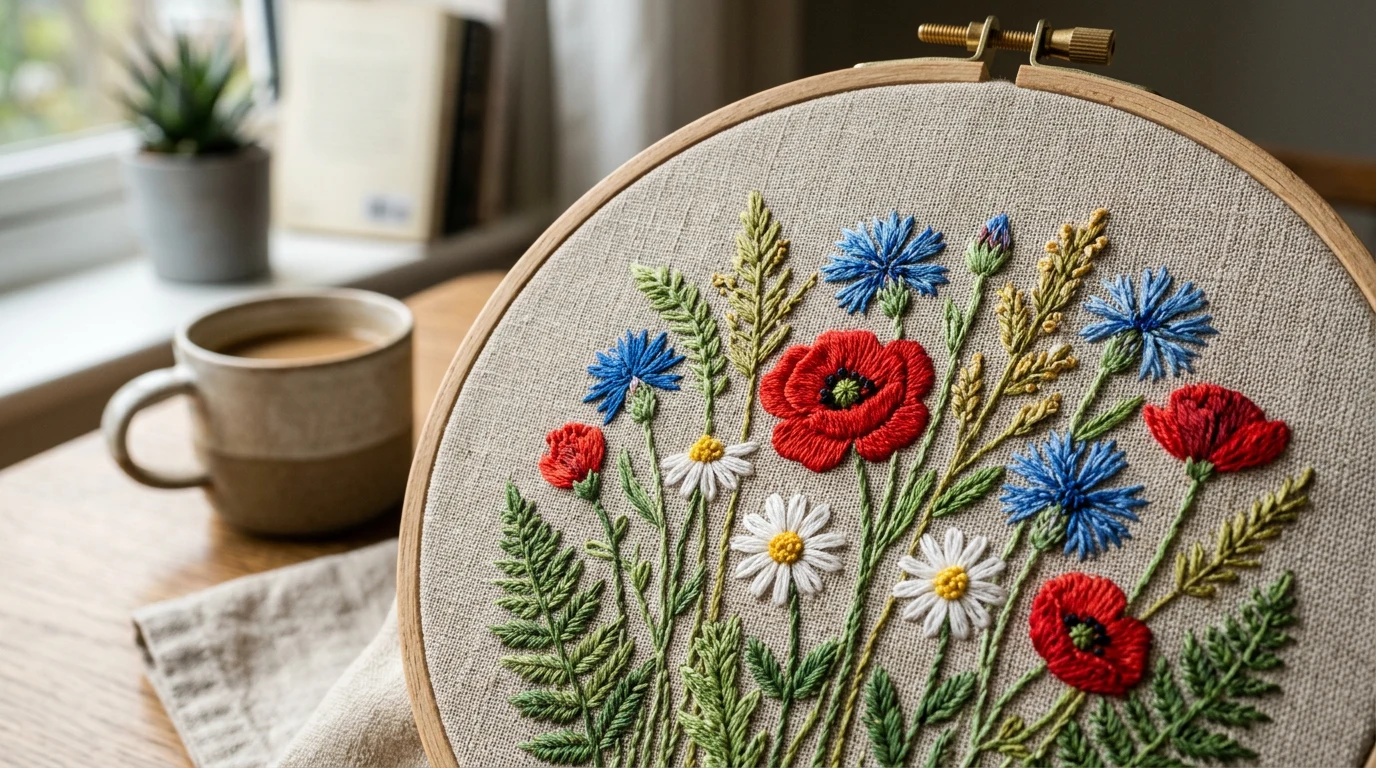
Top pattern shops to explore include designers who specialize in botanical line art, abstract compositions, and pet portraits. Reading shop reviews helps identify sellers whose instructions match your learning style. Understanding modern embroidery patterns is key to a great craft hobby.
Instagram is the primary showcase for modern embroidery art. Following hashtags like #modernembroidery, #contemporaryembroidery, #embroideryhoopart, and #threadpainting exposes you to an incredible range of styles and artists. Many artists who post their work also sell patterns through their websites or Etsy shops.
Beyond pattern sourcing, Instagram serves as a living mood board for color palette ideas, composition approaches, and technique inspiration. Spending 15 minutes browsing embroidery hashtags before starting a new project often sparks ideas you would never have found otherwise.
Embroidery Books
The modern embroidery book market has exploded in recent years. Titles focused on contemporary techniques, thread painting, and modern botanical embroidery fill craft store shelves and library holds lists. Books offer curated collections of patterns along with detailed technique instruction, making them excellent resources for building skills alongside your pattern library.
Popular modern embroidery books often include transfer patterns that you can trace directly from the pages, making them immediately actionable.
Free Pattern Resources
Several online resources offer quality free patterns for modern embroidery. Craft blogs, DMC’s free pattern library, and sites like Craftsy and Gathered all host free designs. While free patterns are generally simpler than premium designs, many are well-designed and perfectly suitable for both practice and finished pieces.
YouTube tutorials also frequently include free patterns. Many embroidery educators share their patterns for free and monetize through video views, making YouTube an excellent source for free designs with accompanying video instruction.

- [ INCLUDES EVERYTHINGS YOU NEED ] Exquisite gift box contains 4 embroidered fabr
- [ 4 STAGES FROM BEGINNER TO EXPERT ] Master embroidery step by step with our cro
- [ DETAILED INSTRUCTION & VIDEO ] We’ve got you covered with detailed instruction
How to Choose a Modern Pattern as a Beginner
Not all modern patterns are beginner-friendly, even if they look simple. Here is what to evaluate before choosing a pattern.
| Factor | Beginner-Friendly | May Be Too Advanced |
|---|---|---|
| Number of stitches | 3-5 basic stitches | 8+ including specialty stitches |
| Color changes | 2-5 colors | 10+ colors with blending |
| Fill areas | Small or none | Large areas requiring thread painting |
| Detail level | Simple shapes, bold lines | Fine details, realistic shading |
| Size | 4″-6″ hoop | 8″+ with dense coverage |
| Estimated time | 3-8 hours | 20+ hours |
Look for patterns that explicitly list required stitches and difficulty level. The best pattern designers for beginners include a stitch guide with each pattern, so you do not need to look up techniques separately.
2026 Trend Predictions for Modern Embroidery
Based on emerging work from leading embroidery artists and trending patterns on platforms like Etsy and Instagram, here are the directions modern embroidery is heading. When it comes to modern embroidery patterns, preparation matters most.

- Mixed media embroidery: Combining stitching with watercolor, ink, or printed fabric backgrounds continues to grow. The interplay between thread and other media creates visually rich pieces with depth and contrast.
- Embroidery on clothing and accessories: Personalizing denim jackets, tote bags, hats, and sneakers with embroidered designs has moved from niche to mainstream. Patterns specifically designed for wearable placement are increasingly available.
- Darker, moodier palettes: Moving away from the pastel-heavy aesthetic of recent years, deeper colors like burgundy, forest green, navy, and black are gaining popularity, especially for botanical and landscape designs.
- Cultural and folk art influences: Modern interpretations of traditional embroidery styles from various cultures (Mexican Otomi, Japanese Sashiko, Hungarian folk motifs) bring global design heritage into contemporary contexts.
- Sustainability themes: Patterns featuring endangered species, native plants, and environmental messaging reflect growing eco-awareness in the craft community.
Tips for Adapting Patterns to Your Style
One of the joys of embroidery is that every pattern is a starting point, not a mandate. Here are ways to make any pattern feel uniquely yours.
- Change the color palette. The same botanical pattern looks entirely different in earthy neutrals versus bright jewel tones versus monochrome.
- Swap stitches. If a pattern calls for satin stitch fill and you prefer the texture of long-and-short stitch, make the switch. The shape stays the same, but the character changes.
- Scale up or down. Most patterns can be enlarged or reduced using a photocopier or image editing software before transfer.
- Combine elements from different patterns. Take the flowers from one pattern, the lettering from another, and the border from a third to create a custom composition.
- Experiment with fabric color. Many modern patterns look stunning on dark fabric (like navy or black linen) instead of the standard white.
According to the LoveCrafts embroidery community, the number of available digital embroidery patterns has grown significantly year over year, reflecting both rising demand and a vibrant independent designer community. The variety available today means there is genuinely a pattern for every taste and skill level.
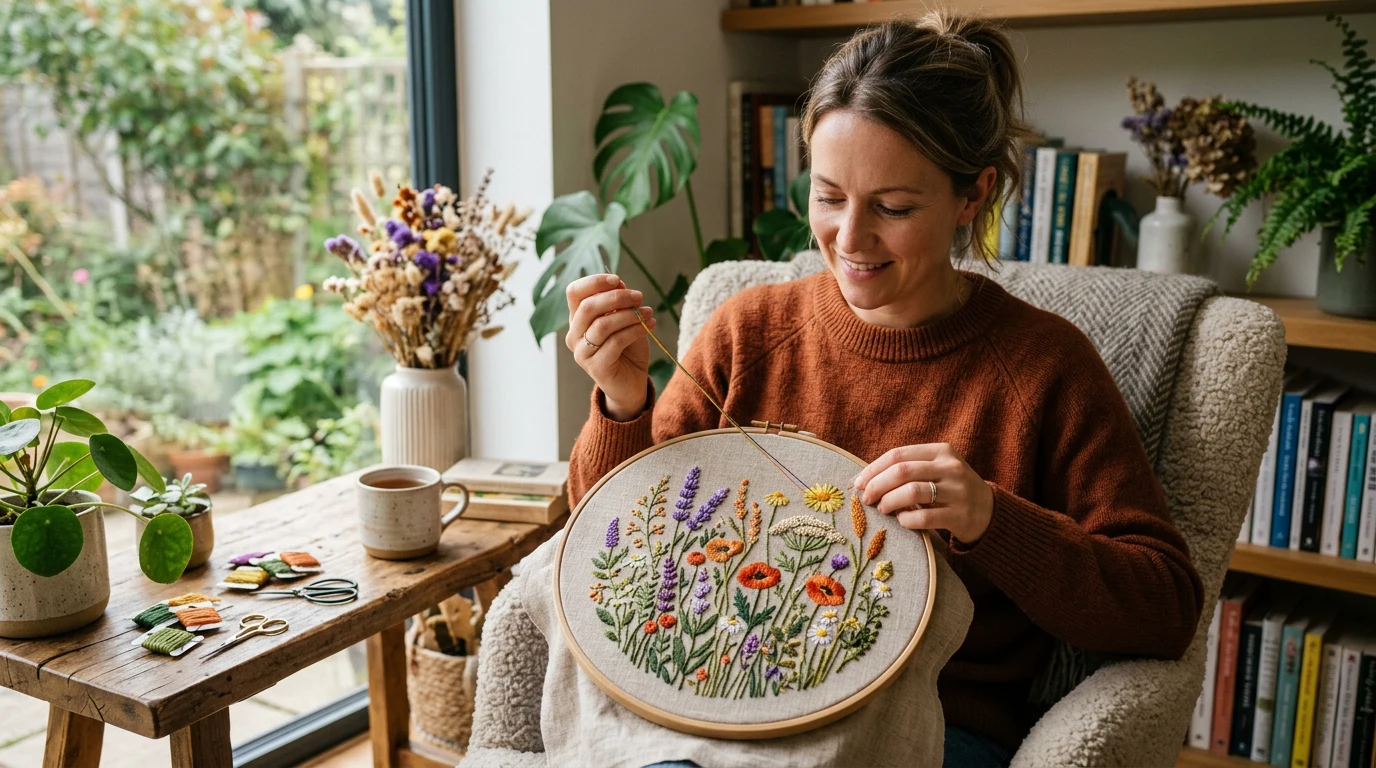

- ALL-IN-ONE EMBROIDERY KIT: 3 pre-printed “Enjoy Your Life” floral practice fabri
- BEGINNER-FRIENDLY: Includes 33 essential stitch diagrams + HD video tutorials; M
- ELEGANT GIFT PACKAGING: Comes with a premium rigid gift box to keep floss neatly
Starting Your First Modern Project
If you are inspired to start a modern embroidery project, here is a simple path forward.
- Browse for inspiration on Instagram or Etsy until a style resonates with you.
- Choose a beginner-friendly pattern in that style (3-5 stitches, small hoop, limited colors).
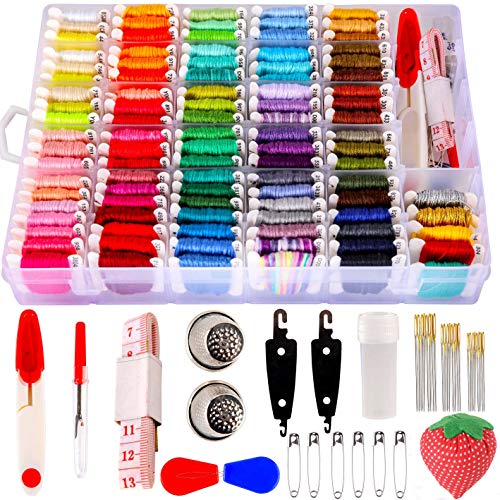
- Gather supplies: hoop, fabric, floss in the pattern’s colors, needles, and transfer tools.
- Transfer the pattern using your preferred method (light box tracing, water-soluble stabilizer, or iron-on transfer).
- Stitch at your own pace. There is no deadline. Enjoy the process.
- Share your work. The embroidery community online is overwhelmingly supportive and encouraging, especially to beginners.
Modern embroidery welcomes imperfection. Slightly uneven stitches, creative color choices, and personal adaptations are not mistakes. They are what make hand embroidery distinct from machine-made decoration. Your piece will carry the character of your hands, and that is exactly the point.

Frequently Asked Questions
Are modern embroidery patterns harder than traditional ones?
Not necessarily. Many modern patterns are simpler than traditional designs because they emphasize clean lines and negative space over dense, all-over coverage. Minimalist modern patterns are some of the most beginner-friendly options available. More complex styles like thread painting or stumpwork are advanced, but there are modern patterns at every skill level.
Can I sell items I make from purchased embroidery patterns?
This depends on the pattern designer’s licensing terms. Some explicitly allow small-batch commercial use (selling finished pieces at craft fairs or online), while others restrict use to personal projects only. Always check the pattern’s terms of use before selling finished items. When in doubt, contact the designer directly.
What is the best fabric for modern embroidery?
Medium-weight linen and cotton remain the top choices. For modern embroidery specifically, many stitchers prefer linen for its slightly textured look that complements contemporary designs. Cotton is smoother and easier to transfer patterns onto. Dark-colored fabrics (navy, black, grey) are popular for modern designs that contrast light thread against dark backgrounds.
How do I design my own modern embroidery pattern?
Start by sketching simple designs on paper, keeping shapes basic and lines clean. Think about which stitches you will use for each element before committing to fabric. Many embroiderers trace over photographs or digital illustrations to create custom patterns. Apps like Procreate on iPad are popular tools for designing patterns digitally before transferring them to fabric.
Where can I find free modern embroidery patterns?
DMC’s website offers a library of free patterns, many in contemporary styles. Craft blogs and YouTube channels frequently share free downloadable patterns. Pinterest is another excellent discovery platform, though always click through to the original source to ensure you are downloading from the actual designer. Embroidery Facebook groups and Reddit’s r/Embroidery also share free patterns regularly.
What’s the difference between modern embroidery patterns and traditional embroidery?
Modern embroidery uses the same traditional stitches but applies them to contemporary subjects like pop culture, minimalist designs, and personal expression, rather than historical motifs. Traditional embroidery focuses on symmetrical, repeating patterns and precision, while modern embroidery embraces asymmetrical compositions, negative space, and unconventional color palettes drawn from everyday life.
Where can I find modern embroidery patterns to try?
You can find modern embroidery patterns on Instagram through hoop art posts, craft websites, and dedicated embroidery pattern resources. Many independent designers also sell digital patterns online that you can download and print for your projects.
Do I need special skills or equipment to start modern embroidery?
No, modern embroidery uses the same basic stitches and tools (needle, thread, hoop, fabric) that traditional embroidery has used for centuries. If you already know how to embroider, you can start creating modern pieces right away; if you’re new to it, beginner tutorials can teach you the fundamental stitches needed to get started.
What are the most popular modern embroidery styles in 2026?
Minimalist botanicals are among the most popular styles trending in 2026, featuring simple line work and negative space in nature-inspired designs. Other trending styles include minimalist line art, abstract landscapes, bold typography, and pieces that incorporate mixed media like painting or fabric collage.
These statements have not been evaluated by the Food and Drug Administration. This information is not intended to diagnose, treat, cure, or prevent any disease. Content is for informational purposes only and is not medical advice; consult a qualified healthcare provider before starting any supplement. As an Amazon Associate we earn from qualifying purchases.
