You’ve probably heard someone say that knitting is “like meditation” or that crafting helps them “zone out.” But is there actual science behind these claims, or is it just feel-good talk? The answer might surprise you. Decades of research have explored the mental health benefits of crafting, and the findings are remarkably consistent: working with your hands genuinely changes your brain chemistry for the better.
Whether you’re crocheting a blanket, throwing pottery, or embroidering a pillowcase, the act of creating something tangible does measurable things to your stress hormones, your mood, and your cognitive function. Let’s look at what the research actually shows.
The Science of Craft and Mental Health: The Mental Health Benefits Of
The connection between crafting and mental health isn’t new age speculation. It’s grounded in neuroscience, psychology, and occupational therapy research spanning several decades.
A widely cited study published in the British Journal of Psychiatry found that creative activities, including textile crafts, were associated with significant reductions in depression and anxiety symptoms. Participants who engaged in regular crafting reported higher levels of positive emotion, social connection, and sense of purpose compared to control groups.
The University of Helsinki’s landmark research went even further, linking regular engagement in traditional hobby activities to 8+ additional years of life expectancy. While lifestyle factors certainly play a role, researchers noted that the stress-reduction benefits of these activities likely contribute to longevity.
How Crafting Reduces Anxiety
Anxiety thrives on rumination, the endless loop of worried thoughts about things you can’t control. Crafting interrupts that loop in several important ways.
Bilateral Rhythmic Movement
Many crafts involve repetitive, bilateral hand movements. Knitting requires both hands working in a rhythmic pattern. Crochet involves a steady hook-and-pull motion. Embroidery uses a consistent in-and-out stitch rhythm. These bilateral movements activate both hemispheres of the brain simultaneously, which research suggests can reduce emotional distress. This is the same principle behind EMDR (Eye Movement Desensitization and Reprocessing), a well-established therapy for trauma and anxiety.
Cortisol Reduction
Cortisol is your body’s primary stress hormone. When you’re anxious, cortisol floods your system, keeping you in a state of heightened alertness. Studies measuring cortisol levels before and after crafting sessions have found significant drops. One study found that 45 minutes of creative activity reduced cortisol regardless of the participant’s skill level or the quality of what they produced. It wasn’t about making something good. It was about the process itself.
Sensory Grounding
Anxiety often pulls you out of the present moment and into catastrophic future scenarios. Crafting grounds you in physical sensory experience. The softness of yarn between your fingers. The smell of fresh clay. The visual feedback of stitches forming a pattern. These sensory inputs anchor your attention to the present, functioning as a natural mindfulness practice without the pressure of formal meditation.
Crafting and Depression: Building Momentum
Depression steals your sense of agency. Everything feels pointless, and getting started on anything feels impossible. Crafting offers a gentle on-ramp back to functioning because it provides something depression systematically strips away: evidence that you can do things and that those things matter.
The Completion Effect
Finishing a craft project, even a small one, triggers a dopamine release. Your brain registers the completion as an accomplishment and rewards you for it. When you’re depressed, these small wins can be genuinely transformative. Completing a dishcloth might seem trivial from the outside, but for someone who hasn’t felt capable of finishing anything in weeks, it’s proof that they still can. Mastering the mental health benefits of takes practice but delivers great results.
Tangible Evidence of Progress
Unlike many modern activities where progress is abstract (emails answered, meetings attended, social media posts made), crafting produces physical evidence that you’ve done something. You can hold it, wear it, or give it away. That tangibility matters enormously when your brain is telling you that nothing you do has value.
Behavioral Activation
Therapists often use behavioral activation, the practice of scheduling pleasant activities, as a frontline treatment for depression. Crafting is an ideal behavioral activation tool because it’s enjoyable enough to motivate engagement, structured enough to provide direction, and scalable: you can do five minutes or five hours depending on your energy level.
Flow State: The Crafter’s High
Psychologist Mihaly Csikszentmihalyi coined the term “flow” to describe a state of complete absorption in an activity. During flow, you lose track of time, your inner critic quiets down, and you feel a deep sense of engagement. Crafting is one of the most reliable ways to enter flow state.
Flow happens when the challenge of an activity matches your skill level. Too easy, and you’re bored. Too hard, and you’re frustrated. Crafting naturally scales with your abilities. As a beginner, a basic stitch pattern provides enough challenge. As you advance, more complex patterns keep the flow state accessible.
Regular flow state experiences are associated with higher life satisfaction, greater resilience, and lower rates of burnout. Some researchers consider flow a key component of psychological wellbeing, placing it alongside positive relationships and meaning as a pillar of a good life.

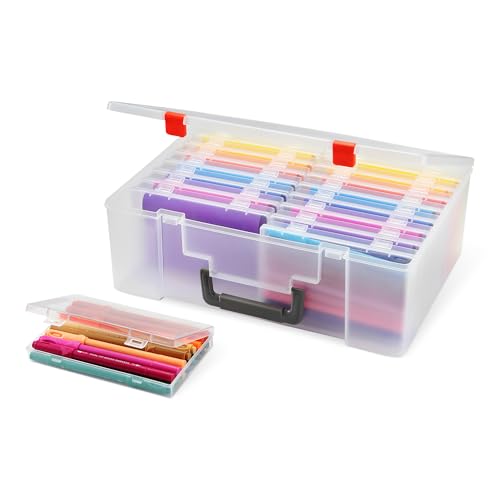
- PHOTO STORAGE: Each case holds up to 100 4×6-inch photographs with 16 clear comp
- MULTI-PURPOSE: Perfect for organizing photos, craft supplies, scrapbooking items
- DURABLE PROTECTION: Constructed with crack-resistant polypropylene plastic for l
Crafting as Social Medicine
Loneliness is increasingly recognized as a public health crisis, with health impacts comparable to smoking 15 cigarettes a day. Crafting communities, both online and in person, offer a powerful antidote.
The Parallel Play Advantage
Not everyone thrives in conversation-heavy social settings. Craft groups offer “parallel play,” the ability to be with others while focusing on your own project. You can participate in community without the pressure of constant social performance. Conversation happens naturally around the shared activity, removing the awkwardness of forced interaction.
Intergenerational Connection
Traditional crafts uniquely bridge generational gaps. A 25-year-old learning to quilt from a 75-year-old creates a relationship that might not form in any other context. These intergenerational connections benefit both parties: younger crafters gain skills and perspective, while older crafters gain purpose and social engagement. Research consistently shows that intergenerational relationships improve wellbeing for both age groups.
Online Craft Communities
For those who can’t access local groups, online craft communities provide meaningful connection. Ravelry (for knitters and crocheters), Reddit’s crafting subreddits, and Facebook craft groups foster genuine friendships. Unlike many online spaces that breed comparison and negativity, craft communities tend to be supportive, encouraging, and focused on shared growth rather than competition.
Cognitive Benefits: Keeping Your Brain Sharp
The mental health benefits of crafting extend to cognitive function, which becomes increasingly important as we age.
Pattern Recognition and Problem-Solving
Reading a knitting pattern, figuring out color combinations in quilting, or calculating measurements for a sewing project all engage your problem-solving abilities. These cognitive demands keep neural pathways active and may help build cognitive reserve, the brain’s resilience against age-related decline. Understanding the mental health benefits of is key to a great craft hobby.
Fine Motor Skills and Neuroplasticity
The detailed hand movements required by most crafts, threading needles, manipulating hooks, shaping clay, promote fine motor skill development and maintenance. These activities stimulate neuroplasticity, your brain’s ability to form new neural connections. Research on aging populations found that those who regularly engaged in crafting activities had a 30-50% lower risk of cognitive impairment compared to non-crafters.
Memory and Concentration
Following multi-step craft instructions, counting stitches, and tracking pattern repeats all exercise working memory. In an era of constant distraction and shrinking attention spans, crafting trains your brain to sustain focus on a single task. That skill transfers to other areas of life, improving your ability to concentrate at work, during conversations, and while reading.
Crafting and Trauma Recovery
Occupational therapists have long used crafting as a tool in trauma recovery. The reasons are both practical and neurological.
Trauma often leaves people feeling disconnected from their bodies and unable to regulate their emotions. Crafting provides a safe, controlled way to re-engage with physical sensation. The repetitive nature of many crafts can help regulate the nervous system, moving it from a state of hyperarousal (fight-or-flight) to a calmer parasympathetic state.
Several veterans’ organizations now offer craft therapy programs, recognizing that activities like woodworking, knitting, and pottery can complement traditional trauma therapies. These programs consistently report improvements in participants’ sleep quality, emotional regulation, and social engagement.
Which Crafts Offer the Most Mental Health Benefits?
While all crafting is beneficial, research suggests some activities may offer specific advantages.
| Craft | Primary Mental Health Benefit | Best For |
|---|---|---|
| Knitting/Crochet | Anxiety reduction (repetitive rhythm) | Stress relief, meditation alternative |
| Pottery/Ceramics | Emotional expression, sensory grounding | Processing difficult emotions, PTSD |
| Embroidery/Cross-Stitch | Focus and mindfulness | Attention training, rumination relief |
| Quilting | Problem-solving, community | Cognitive stimulation, social connection |
| Painting/Drawing | Self-expression, emotional release | Art therapy applications |
| Gardening | Grounding, routine, nature exposure | Depression, seasonal affective disorder |
| Baking/Cooking | Nurturing behavior, sensory engagement | Self-care, caring for others |
| Woodworking | Focus, accomplishment, physical engagement | ADHD management, confidence building |
The “best” craft for mental health is ultimately whichever one you’ll actually do consistently. Benefits compound with regular practice. A craft you love and do three times a week will always beat one you “should” do but avoid.

- 【WORK SURFACE FOR MIXED MEDIA】Multipurpose tool for any arts and crafts space. M
- 【DURABLE CONSTRUCTION】Heat-resistant and scratch-resistant glass surface protect
- 【THOUGHTFUL DESIGN】The craft mat provides the perfect glass surface for crafting
How to Use Crafting as a Mental Health Tool
If you want to intentionally use crafting to support your mental health, a few practices can amplify the benefits.
Make It a Routine
The mental health benefits of crafting are most pronounced with regular practice. Even 15-20 minutes a day can create noticeable changes in your stress levels and mood. Try linking crafting to an existing habit, like crafting while you drink your morning coffee or after dinner instead of scrolling your phone.
Release the Pressure to Be Productive
The therapeutic benefits come from the process, not the product. If you turn every craft project into something you “should” sell, gift, or post on Instagram, you risk converting a stress-relief activity into another source of pressure. Give yourself permission to make things purely for the joy of making them. Ugly scarves count. Lopsided pots count. The point is the doing.
Pair It with Other Wellness Practices

Crafting pairs beautifully with other activities known to support mental health. Knit while listening to calming music. Join a craft circle to combine creativity with social connection. Sit by a window with natural light while you embroider. Garden to combine crafting with nature exposure and gentle physical movement. When it comes to the mental health benefits of, preparation matters most.
Start Accessible
Don’t choose a complex, months-long project as your first crafting experience. Pick something you can finish in a few sessions to get that completion dopamine hit early. Starter projects like a simple dishcloth, a basic embroidery hoop design, or a hand-coiled pottery bowl are ideal for building momentum without frustration.
Crafting Is Not a Replacement for Professional Help
This is an important caveat. While the mental health benefits of crafting are well-documented, crafting is a complement to professional mental health care, not a replacement for it. If you’re experiencing clinical depression, severe anxiety, PTSD, or any other mental health condition, please seek support from a qualified therapist or counselor.
What crafting can do is provide an additional tool in your wellness toolkit, one that’s accessible, affordable, and genuinely enjoyable. Many therapists actively encourage creative hobbies alongside formal treatment.
The Research Will Only Grow
As interest in the connection between crafting and wellbeing continues to grow, so does the body of research. Universities, hospitals, and wellness organizations are investing in studies exploring how specific craft activities affect brain chemistry, emotional regulation, and social connectedness.
What we already know is powerful enough: crafting reduces cortisol, interrupts anxious thought patterns, triggers flow states, builds social connections, and creates tangible evidence of your own capability. Your grandmother might not have had the vocabulary for “bilateral rhythmic movement” or “behavioral activation,” but she knew something just as important: that keeping your hands busy keeps your heart lighter.
Frequently Asked Questions
How long do you need to craft to see mental health benefits?
Research suggests that as little as 15-20 minutes of crafting can produce measurable reductions in stress hormones. For sustained mental health improvements, aim for regular sessions of 30-45 minutes, three or more times per week. However, even brief sessions provide immediate mood-boosting effects. Consistency matters more than duration.
Does your skill level matter for the mental health benefits?
No. Studies measuring cortisol reduction after creative activity found that skill level and the quality of the finished product had no impact on the stress-relief benefits. Beginners experience the same cortisol reduction as experienced crafters. What matters is the engagement with the process, not the outcome. This means you don’t need to be “good at” a craft to benefit from it.
Can crafting help with ADHD?
Many people with ADHD report that crafting helps them focus and regulate their attention. The combination of physical hand movement, visual engagement, and structured steps can provide enough stimulation to keep an ADHD brain engaged while also being calming. Crafts that involve counting or pattern following (like knitting or cross-stitch) can be particularly helpful. Some ADHD specialists recommend having a small craft project available during meetings or lectures to aid concentration.
Is crafting better than meditation for anxiety?
They work differently, and neither is universally “better.” Some people, particularly those who struggle with sitting still or find their anxiety worsens during silent meditation, may find crafting a more accessible path to mindfulness. Crafting provides an anchor for attention (the physical task) that pure meditation doesn’t. Many therapists suggest trying both and using whichever works best for you. They can also be combined, practicing mindful awareness while crafting.
What if crafting makes me more stressed because I’m not good at it?
This is common and usually happens when expectations are too high or the chosen project is too complex. The fix is to start simpler. Choose a beginner-friendly craft, follow an easy tutorial, and focus on enjoying the process rather than judging the result. If a particular craft consistently frustrates you, try a different one. The goal is to find an activity that puts you in a relaxed, engaged state. There’s no rule that says you have to love knitting. Maybe you’re a pottery person, or a gardening person, or a bread baking person.
Is there actual scientific proof that crafting improves mental health?
Yes, decades of research confirm it. A study in the British Journal of Psychiatry found that creative activities like textile crafts significantly reduce depression and anxiety symptoms, with participants reporting higher levels of positive emotion and sense of purpose compared to control groups.
How does knitting and other crafts actually reduce anxiety?
Crafts interrupt anxious thought loops through bilateral rhythmic movements, where both hands work in coordinated patterns. This repetitive motion helps calm your nervous system and redirects your mind away from worry, similar to how meditation works.
Can the mental health benefits of crafting actually add years to your life?
Research from the University of Helsinki found that regular engagement in traditional hobby activities like crafting was linked to 8+ additional years of life expectancy. While multiple lifestyle factors contribute, the stress-reduction benefits of these activities likely play a significant role in this longevity effect.
Which crafts are best for improving my mood and cognitive function?
Any hands-on creative activity works, including knitting, crochet, embroidery, pottery, and painting. The key is choosing something you enjoy and doing it regularly, as the combination of focused attention and repetitive motion is what creates the measurable benefits to your brain chemistry and mood.
These statements have not been evaluated by the Food and Drug Administration. This information is not intended to diagnose, treat, cure, or prevent any disease. Content is for informational purposes only and is not medical advice; consult a qualified healthcare provider before starting any supplement. As an Amazon Associate we earn from qualifying purchases.
