If there is one skill that determines whether your quilt blocks turn out right, it is sewing a consistent quarter-inch seam. This seemingly small detail is the difference between blocks that fit together perfectly and blocks that are too big, too small, or frustratingly uneven. Mastering the quarter-inch seam is not difficult, but it does require understanding, practice, and the right tools.
This guide explains why the quarter-inch seam matters so much, how to test and calibrate yours, and the tools and techniques that make consistent seams easy.
Our reviews are based on aggregated verified buyer feedback, manufacturer specifications, and published expert opinion. Products are not independently tested by our team.
Why the Quarter-Inch Seam Matters So Much
Every quilting pattern assumes a quarter-inch seam allowance. When patterns say to cut a 3.5-inch square, they expect the finished (sewn) size to be 3 inches, with a quarter inch on each side consumed by the seam. If your seam is wider than a quarter inch, your finished pieces will be smaller than expected. If your seam is narrower, your pieces will be larger.

The error compounds quickly. A seam that is off by just one-sixteenth of an inch does not sound like much. But a nine-patch block has eight seams. That is half an inch of accumulated error in a single block. When you join 20 blocks into a quilt, the errors multiply further, creating blocks of different sizes that refuse to align.
Consistent seam allowances also affect quilting design. Patterns with points, like star blocks and pinwheel blocks, require precise seams for the points to meet properly. A seam that is too wide will cut off the points. A seam that is too narrow will create gaps. Getting the quarter inch right is what makes these designs look sharp and professional.
Testing Your Seam Allowance
Before starting any quilting project, test your seam allowance. This takes five minutes and can save hours of frustration.
The Three-Strip Test
Cut three strips of fabric, each exactly 2 inches wide and about 6 inches long. Sew the three strips together along their long edges using what you believe is a quarter-inch seam. Press the seams to one side.
Now measure the center strip. It should measure exactly 1.5 inches wide. If it is wider than 1.5 inches, your seam is too narrow. If it is narrower than 1.5 inches, your seam is too wide. Adjust your needle position or guide and test again until the center strip measures exactly 1.5 inches.
The Single Seam Test
For a quicker check, cut two squares exactly 3 inches each. Sew them together along one edge. Press the seam to one side. The resulting rectangle should measure exactly 3 by 5.5 inches. If it does not, adjust your seam guide and test again.
Using a Quarter-Inch Presser Foot
A quarter-inch presser foot is the single most effective tool for achieving accurate seams. It has a built-in guide, usually a metal flange or a clearly defined edge, that sits exactly one quarter inch from the needle. When you align your fabric edge with this guide, the needle sews at precisely the right distance from the edge.
Types of Quarter-Inch Feet
Guide foot: Has a metal guide or flange that the fabric edge rides against. This is the most foolproof option because you can feel the fabric against the guide. It practically makes the seam for you.
Edge foot: Has a right edge that is positioned exactly a quarter inch from the needle. You align the fabric edge with the foot edge. Requires slightly more attention than a guide foot because there is no physical stop.
Either type works well. Most sewing machine brands offer a quarter-inch foot for $10 to $20. It is compatible with your specific machine brand and model. Check your machine’s manual or contact the manufacturer to find the right foot for your machine. For a complete accessories list, see our essential quilting tools guide.
Important: Verify Your Foot
Even with a quarter-inch foot, always run the three-strip test. Some feet position the needle slightly differently depending on needle position settings, thread width, and other factors. Trust your test measurements over the label on the foot. If the foot produces a seam that is slightly off, you can compensate by adjusting the needle position one click to the left or right.
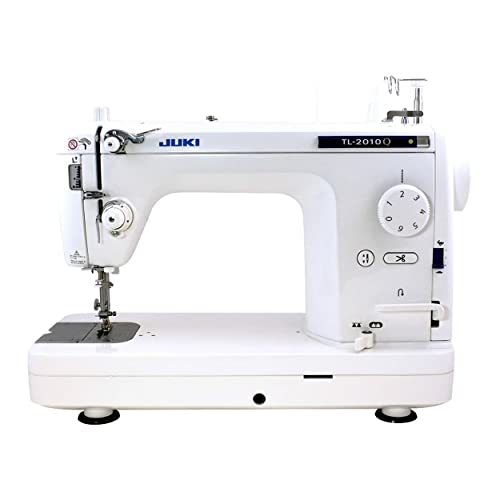
- 1500 stitches per minute
- Auto thread trimmer
- Knee-lift lever included
Tape and Guide Methods
If you do not have a quarter-inch foot, you can create an accurate seam guide using materials you already have.
Painter’s Tape Guide
Place your quilting ruler under the presser foot with the quarter-inch line aligned directly under the needle. (Lower the needle to verify the position.) Place a strip of painter’s tape on the throat plate along the right edge of the ruler. The tape creates a visible line that you align your fabric edge with while sewing. Painter’s tape peels off cleanly without leaving residue.
Magnetic Seam Guide
A magnetic seam guide attaches to the throat plate of your machine and creates a physical barrier that the fabric edge rides against. Position it a quarter inch from the needle using a ruler. The magnetic grip holds it firmly in place during sewing. This is the next best thing to a quarter-inch presser foot and costs about $5 to $8.
Note: Do not use magnetic guides on computerized machines without checking your manual first. Some computerized machines have internal electronics that can be affected by strong magnets. Older mechanical machines are fine with magnetic guides.
Scant Quarter-Inch Seams Explained
You may see quilting patterns and books reference a “scant” quarter-inch seam. This means sewing just a thread or two less than a full quarter inch. The reason is practical: when you press a seam to one side, the fold of the fabric uses up a tiny bit of width. A scant seam compensates for this loss, ensuring your finished block comes out to the expected measurement.
In practice, the difference between a true quarter inch and a scant quarter inch is about one-sixteenth of an inch. Some quarter-inch presser feet are designed to sew a scant quarter inch automatically. If your three-strip test produces a center strip that measures 1.5 inches before pressing but slightly under 1.5 inches after pressing to the side, you may want to adopt a slightly scant seam.
Do not overthink this. Consistency matters more than whether you sew a true or scant quarter inch. If all your seams are the same width, your blocks will be the same size, and that is what matters for a quilt that fits together well.
Troubleshooting Inconsistent Seams
If your seam allowance varies from seam to seam, here are the most common causes and fixes.
Fabric drifting away from the guide: You may be pulling the fabric toward you instead of letting the feed dogs move it. Relax your hands. Guide the fabric gently but let the machine control the feed speed. Your job is to keep the fabric edge against the guide, not to push or pull the fabric through the machine.
Different seam widths at the start and end: The beginning and end of each seam are where inconsistencies are most common. Start sewing slowly and make sure the fabric is properly aligned before you accelerate. At the end of the seam, keep the fabric guided until it clears the presser foot.
Seam width changes at intersections: When crossing existing seams, the extra bulk can push the fabric slightly out of alignment. Slow down when approaching seam intersections and make sure the fabric stays against your guide. Some quilters use a stiletto (a pointed tool) to hold fabric in place while crossing thick intersections. According to the American Quilter’s Society, mastering consistent seam allowances is the single most impactful skill improvement for new quilters.
Practice Exercises for Beginners
Dedicated practice sessions using scrap fabric build your seam accuracy faster than learning while working on an actual project.
Exercise 1: Strip Piecing
Cut ten strips of scrap fabric, each 2.5 inches wide. Sew them together in pairs, press, and measure. Each pair should measure exactly 4.5 inches wide (2.5 + 2.5 minus 0.5 for two seam allowances). Track how consistent your measurements are and adjust your technique until every pair is identical.
Exercise 2: Four-Patch Blocks
Cut eight 3-inch squares (four of each color). Sew four two-patch units, then join them into four-patch blocks. Each finished block should measure exactly 5 inches square (5.5 inches unfinished). This exercise practices seam nesting and intersection matching as well as seam width consistency.
Exercise 3: Speed and Consistency
Sew 20 pairs of scrap squares at your normal sewing speed. Measure every resulting rectangle. If your measurements are consistent within one-sixteenth of an inch, your seam technique is solid. If they vary more than that, slow down and focus on keeping the fabric against your guide. Speed will come naturally as your muscle memory develops. For more foundational skills, visit our complete beginner’s guide.
Frequently Asked Questions
Why are my blocks the wrong size even with a quarter-inch foot?
The most common reasons are: the foot is not positioned accurately for your specific machine (test and adjust), you are not pressing seams consistently, or your cutting is slightly off. Run the three-strip test to verify your foot. Then check that your cutting measurements are precise. Often the culprit is a combination of small errors in both cutting and sewing that compound.
Does the quarter-inch include the thread width?
Technically, the thread adds a tiny amount of width. This is part of why the scant quarter-inch seam exists, to account for thread width and the fold of pressing. In practice, the thread width is negligible for most quilting projects. Focus on consistency rather than trying to compensate for thread width.

Can I use a different seam allowance?
You can, but you should not. Quilting patterns universally assume a quarter-inch seam. Using a different allowance means recalculating every cutting measurement in every pattern, which is impractical and error-prone. Adopt the quarter-inch seam and build your skills around it. It is the quilting standard for very good reasons. Our beginner’s guide explains all the quilting conventions you need to know.
Why is a quarter-inch seam so important in quilting?
Every quilting pattern is designed with a quarter-inch seam allowance in mind, so your finished pieces need to be the correct size for blocks to fit together properly. When seams are off by even a small amount, the errors compound quickly across multiple blocks and seams, making your quilt pieces refuse to align and creating uneven results.
How much error can accumulate from an inaccurate seam allowance?
A seam that is off by just one-sixteenth of an inch doesn’t seem like much, but a nine-patch block has eight seams, which means you can accumulate up to half an inch of error in a single block. When you join multiple blocks into a full quilt, these errors multiply further and create blocks of different sizes that won’t fit together properly.
What happens to decorative quilt designs if my seams aren’t accurate?
Quilting designs with points, like star blocks and pinwheel blocks, require precise seams for the points to meet properly and look sharp. A seam that is too wide will cut off the points, while a seam that is too narrow will create gaps, making your finished quilt look unprofessional.
How can I test if my quarter-inch seam guide is accurate?
You should test and calibrate your seam allowance by sewing practice pieces and measuring them carefully to ensure you’re consistently achieving a quarter-inch seam. The article provides detailed instructions on how to perform this test using simple tools you likely already have in your sewing basket.

These statements have not been evaluated by the Food and Drug Administration. This information is not intended to diagnose, treat, cure, or prevent any disease. Content is for informational purposes only and is not medical advice; consult a qualified healthcare provider before starting any supplement. As an Amazon Associate we earn from qualifying purchases.