Choosing the right wax for your candle making journey can feel overwhelming with so many options available. Whether you’re just starting out or looking to expand your repertoire, understanding the differences between soy wax vs beeswax vs paraffin is crucial for creating beautiful, high-quality candles that meet your specific needs and values.
Our reviews are based on aggregated verified buyer feedback, manufacturer specifications, and published expert opinion. Products are not independently tested by our team.
Candle Wax & Fragrance Calculator
Enter your container’s diameter and height to estimate wax weight and fragrance oil needed.
Open the full candle wax calculator →
How this is calculated: Container volume is estimated as a cylinder, filled to
90% of height (leaving headspace). Wax weight uses a typical fill-factor per wax type (usable
wax weight per fl-oz of volume). Fragrance oil is calculated as a percentage of the wax weight.
Wick sizing isn’t included here – it depends on both container diameter and wax type, so check
your wax supplier’s wick guide separately.
Shop Hearth & Harbor Organic Soy Candle Wax for C… on Amazon
(paid link) As an Amazon Associate we earn from qualifying purchases.
Candle Wax Types Overview
The world of candle making offers three primary wax types, each with distinct characteristics that affect everything from burn quality to environmental impact. Soy wax, derived from soybean oil, represents the natural vegetable-based option that’s gained tremendous popularity in recent years. Beeswax, humanity’s oldest candle-making material, comes directly from honeybee colonies and offers unmatched natural beauty. Paraffin wax, a petroleum byproduct, remains widely used due to its excellent scent throw and affordability.

Understanding these fundamental differences helps you make informed decisions based on your priorities—whether that’s environmental consciousness, budget considerations, or specific performance requirements. Each wax type excels in different areas, and many experienced candle makers actually use different waxes for different projects.
Modern candle making has evolved beyond these three basic options to include coconut wax, palm wax, and various wax blends that combine the best features of multiple types. However, mastering the classic trio of soy, beeswax, and paraffin provides the foundation for all other candle making adventures.
Soy Wax: Pros and Cons
Soy wax has revolutionized home candle making since its introduction in the 1990s. Made from hydrogenated soybean oil, this renewable resource offers numerous advantages that have made it the preferred choice for many crafters and commercial candle makers alike.
CandleScience Premium Soy Wax 444 and Golden Brands 464 soy wax represent two of the most popular formulations among home candle makers. Buyers report that these waxes provide excellent glass adhesion, smooth tops, and consistent results across multiple batches. The 444 formula works particularly well for container candles, while 464 offers versatility for both containers and votives.
Soy Wax Advantages
- Burns cleaner with minimal soot production
- Biodegradable and made from renewable resources
- Easy cleanup with warm soapy water
- Excellent scent retention and throw
- Longer burn time compared to paraffin
- Lower melting point makes it safer to work with
- Consistent performance across different container sizes
- Readily available from suppliers like Lone Star Candle Supply
The environmental benefits of soy wax extend beyond its renewable source material. Manufacturing soy wax produces significantly fewer emissions than petroleum-based alternatives, and the finished candles burn more completely, leaving minimal waste. This appeals to crafters who prioritize sustainability in their hobby choices.
Soy Wax Disadvantages
- Higher cost per pound than paraffin
- Can develop frosting or bloom over time
- Softer texture makes demolding pillar candles challenging
- May not hold color as vibrantly as other waxes
- Requires specific wick sizing for optimal performance
- Temperature sensitivity during pouring and cooling
- Some fragrance oils may not bind as well
Reviewers consistently note that while soy wax offers many benefits, it requires attention to detail during the candle making process. Temperature control becomes crucial—pouring too hot can cause sinkholes, while pouring too cool may result in poor glass adhesion or surface imperfections.
Beeswax: Pros and Cons
Beeswax represents the original candle making material, used by civilizations for thousands of years. This natural product, secreted by honeybees to build their combs, offers unique properties that continue to attract modern candle makers despite its higher cost and specific working requirements.
The natural variations in beeswax color and scent reflect the flowers and plants that bees visited during collection. Pure beeswax ranges from nearly white to deep amber, with each batch carrying subtle honey notes that many candle makers find irreplaceable.
Beeswax Advantages
- Completely natural with no processing chemicals
- Burns longest of all wax types
- Naturally purifies air by releasing negative ions
- Beautiful natural honey scent
- Drip-resistant when properly wicked
- Develops attractive patina over time
- Higher melting point creates sturdy pillar candles
- Hypoallergenic properties
The air-purifying qualities of beeswax candles have been documented by environmental researchers, making them popular among people with sensitivities to synthetic fragrances or indoor air quality concerns. The negative ion release can help neutralize pollutants and allergens in the surrounding area.
Beeswax Disadvantages
- Most expensive wax option
- Limited availability and seasonal price variations
- Difficult to blend with fragrance oils
- Requires higher working temperatures
- Natural color variations may affect finished appearance
- Hard to remove from equipment and surfaces
- Not suitable for detailed molded candles
- May require specialized wicking
Buyers report that working with beeswax requires patience and experience to achieve consistent results. The higher melting point means longer heating times and careful temperature monitoring, while the natural stickiness can make cleanup challenging without proper preparation.
Paraffin Wax: Pros and Cons
Paraffin wax, derived from petroleum refining, dominated the candle industry for decades before alternative waxes gained popularity. Despite environmental concerns, paraffin remains relevant due to its superior scent throw capabilities and predictable working characteristics that beginners often find forgiving.
Commercial candle manufacturers continue to rely heavily on paraffin for its consistency and performance advantages. The refined nature of paraffin eliminates many variables that can affect other wax types, making it ideal for large-scale production and intricate candle designs.
Paraffin Wax Advantages
- Lowest cost per pound of all wax types
- Excellent scent throw and fragrance oil binding
- Holds vibrant colors exceptionally well
- Easy to work with for beginners
- Consistent quality and performance
- Ideal for detailed molded candles
- Wide range of melting points available
- Produces smooth, professional-looking finishes
The scent throw capabilities of paraffin wax remain unmatched by most alternatives. Fragrance oils designed for paraffin, such as those from Virginia Candle Supply, can achieve scent projection that fills large spaces effectively. This makes paraffin the preferred choice for highly scented candles or commercial applications.

Paraffin Wax Disadvantages
- Petroleum-based and non-renewable
- May produce more soot than natural alternatives
- Not biodegradable
- Can release chemicals when burned at high temperatures
- Harder to clean up spills
- Less environmentally friendly production process
- May trigger sensitivities in some individuals
- Faster burn rate than soy or beeswax
Environmental and health concerns surrounding paraffin have led many candle makers to explore alternatives. While studies by the National Candle Association indicate that properly made paraffin candles burn safely, the perception of petroleum-derived products continues to influence consumer preferences toward natural options.
- 10-liter capacity
- Digital temp control
- Pour spout included
Coconut and Palm Wax Alternatives
Beyond the traditional trio, coconut and palm wax have emerged as premium alternatives that address specific candle making needs. These tropical plant-derived waxes offer unique properties that complement or surpass conventional options in certain applications. For more guidance, The Spruce Crafts provides expert resources on craft tutorials.
Coconut wax, extracted from coconut meat, represents the newest addition to the candle maker’s arsenal. Suppliers like Nature’s Garden candle supplies have introduced coconut wax blends that combine the benefits of multiple wax types while maintaining the clean-burning characteristics that attract environmentally conscious crafters.
Coconut Wax Benefits
- Exceptional scent throw rivaling paraffin
- Burns cleanest of all wax types
- Luxury appearance with smooth finish
- Excellent glass adhesion
- Higher price point for premium market positioning
- Sustainable sourcing options available
- Works well in various container sizes
Palm Wax Characteristics
- Creates unique crystalline patterns when cooled
- Harder than soy but softer than beeswax
- Good scent throw capabilities
- Renewable resource when sustainably sourced
- Excellent for pillar candles
- Natural variations create artisanal appearance
- Moderate pricing between soy and beeswax
Palm wax requires attention to sustainability certifications, as palm oil production has raised environmental concerns in some regions. Responsible sourcing ensures that your candle making hobby supports sustainable agricultural practices while creating beautiful, unique candles with natural crystalline formations.
Wax Blends: Best of Both Worlds
Experienced candle makers often discover that blending different wax types creates superior performance characteristics that exceed any single wax’s capabilities. These custom formulations allow crafters to optimize specific properties like scent throw, burn time, or appearance while mitigating individual wax limitations.
Popular blend ratios include 70% soy with 30% paraffin for enhanced scent throw while maintaining natural appeal, or 80% soy with 20% coconut wax for premium container candles. The CandleScience Fragrance Calculator helps determine optimal fragrance oil percentages for different wax blend compositions.
Common Blend Combinations
| Blend Ratio | Primary Benefit | Best Use Case |
|---|---|---|
| 70% Soy + 30% Paraffin | Enhanced scent throw | Highly scented container candles |
| 60% Soy + 40% Beeswax | Extended burn time | Premium pillar candles |
| 80% Soy + 20% Coconut | Luxury finish | High-end container candles |
| 50% Paraffin + 50% Soy | Balanced performance | All-purpose candle making |
Blending waxes requires careful temperature control and thorough mixing to achieve homogeneous results. Buyers report success using double boilers or specialized melting equipment like the Pouring Pot by CandleScience to maintain consistent temperatures throughout the blending process.
Testing becomes crucial when developing custom wax blends, as each combination may require different wick sizes, pouring temperatures, and cooling conditions. Documentation of successful blend recipes helps maintain consistency across multiple batches and allows for refinement over time.
Scent Throw Comparison
Scent throw—the distance fragrance travels from a burning candle—varies significantly among wax types and directly impacts the candle’s ability to fragrance a space. Understanding these differences helps match wax selection to intended use and space size.
Paraffin wax consistently delivers the strongest scent throw due to its molecular structure and excellent fragrance oil binding properties. This petroleum-based wax can effectively scent large rooms even with moderate fragrance loading, making it the commercial standard for heavily scented candles.
Scent Throw Rankings
- Excellent: Paraffin wax, Coconut wax
- Very Good: Soy-paraffin blends, Palm wax
- Good: Pure soy wax (with proper fragrance oils)
- Moderate: Soy-beeswax blends
- Limited: Pure beeswax
Fragrance oil selection significantly impacts scent throw regardless of wax type. Virginia Candle Supply fragrance oils are specifically formulated for different wax types, with some designed to enhance natural wax performance. Hot throw (scent while burning) and cold throw (scent when unlit) may vary independently within the same wax-fragrance combination.
Wick selection from sources like the CandleScience Wick Bar affects scent throw by influencing melt pool size and burn temperature. Proper wicking creates optimal fragrance release without producing excessive soot or overwhelming scent intensity that might cause headaches or sensitivities.

Burn Time and Cost Analysis
Economic considerations play a crucial role in wax selection, especially for hobbyists creating candles regularly or small business owners calculating profit margins. Burn time per dollar invested varies significantly among wax types and affects the overall value proposition of finished candles.
Beeswax commands the highest price per pound but also provides the longest burn time, potentially offsetting its initial cost for applications where extended burning is valued. Conversely, paraffin’s low cost makes it attractive for learning purposes or high-volume production despite shorter burn times.

Cost and Performance Comparison
| Wax Type | Cost per Pound | Burn Time | Value Rating |
|---|---|---|---|
| Paraffin | $1.50-$3.00 | 6-8 hours/oz | Good for beginners |
| Soy | $3.00-$5.00 | 8-10 hours/oz | Best overall value |
| Beeswax | $6.00-$12.00 | 10-15 hours/oz | Premium investment |
| Coconut | $8.00-$15.00 | 9-12 hours/oz | Luxury option |
Hidden costs include shipping, storage requirements, and equipment needs that vary by wax type. Beeswax requires higher melting temperatures that may increase electricity costs, while soy wax’s temperature sensitivity might necessitate climate-controlled storage in extreme climates.
Suppliers like Lone Star Candle Supply often offer volume discounts that can significantly impact per-pound costs for regular candle makers. Buying in larger quantities also provides consistency across batches, as wax properties can vary between production runs.
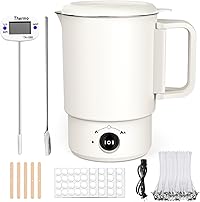
- Large Capacity & Precise Temperature Control: Equipped with a 800ML stainless st
- All-in-One DIY Accessory Set: The kit includes a wax melting pot, independent Ba
- Safe & Durable Material & Design: The pot body is made of food-grade PP material
Health and Environmental Considerations
Health and environmental impacts of candle wax choices extend beyond the immediate crafting experience to affect indoor air quality and broader ecological systems. Understanding these implications helps align candle making practices with personal values and family health priorities.
Research from the EPA indicates that properly burned candles of all wax types produce minimal harmful emissions under normal use conditions. However, differences in combustion byproducts, manufacturing processes, and source sustainability create meaningful distinctions for environmentally conscious crafters.
Environmental Impact Assessment
- Most Eco-Friendly: Beeswax (natural, supports beekeepers), Soy wax (renewable, biodegradable)
- Moderately Sustainable: Coconut wax (renewable but limited supply), Palm wax (renewable with sustainability concerns)
- Least Sustainable: Paraffin wax (petroleum-derived, non-renewable)
Carbon footprint analysis reveals that locally sourced beeswax typically has the lowest environmental impact, while imported coconut or palm wax may offset sustainability benefits through transportation emissions. Soy wax presents a middle ground with domestic production capability and established supply chains.
Health Considerations
Indoor air quality impacts vary among wax types, with natural options generally producing fewer synthetic compounds during burning. Individuals with chemical sensitivities often prefer beeswax or soy wax candles, though proper ventilation remains important regardless of wax type.
Wick selection significantly influences health considerations, with cotton or wood wicks from the Eco wick series producing cleaner burns than metal-core options. The CD wick series offers consistent performance with minimal smoking when properly sized for the chosen wax type.
Our Recommendation by Use Case
Selecting the ideal wax depends on your specific priorities, budget, and intended candle applications. Rather than declaring one wax universally superior, matching wax characteristics to intended use ensures optimal results and satisfaction with your candle making journey.
For Beginners
New candle makers benefit from starting with Golden Brands 464 soy wax or similar beginner-friendly formulations. Soy wax forgives minor temperature variations, cleans up easily, and provides predictable results that build confidence. The moderate cost allows experimentation without significant financial commitment.
For Environmental Consciousness
Environmentally focused crafters should prioritize beeswax from local beekeepers or certified sustainable soy wax. These options minimize environmental impact while supporting sustainable agricultural practices. Avoid paraffin entirely if petroleum products conflict with your values.
For Maximum Scent Throw
Heavily scented candles perform best with paraffin wax or soy-paraffin blends. The superior fragrance oil binding of petroleum-based waxes creates stronger, more consistent scent projection. Pair with high-quality fragrance oils designed for your chosen wax type.
For Premium Candles
Luxury candle applications benefit from beeswax or coconut wax for their superior aesthetics and performance characteristics. The higher cost justifies itself through extended burn times, clean combustion, and perceived value among recipients or customers.
For Budget-Conscious Crafters
Paraffin wax offers the lowest barrier to entry for candle making while still producing attractive, functional candles. Focus on proper technique and quality wicks to maximize performance despite the lower material cost.
Frequently Asked Questions
Which wax holds fragrance the longest?
Paraffin wax typically holds and projects fragrance most effectively due to its molecular structure and excellent fragrance oil binding properties. However, properly formulated soy wax with compatible fragrance oils can achieve comparable performance in container candles. Beeswax has limited fragrance retention but offers natural honey scent.
Is soy wax really better than paraffin?
“Better” depends on your priorities. Soy wax offers environmental advantages, cleaner burning, and easier cleanup, while paraffin provides superior scent throw and lower cost. Many experienced candle makers use both depending on the specific application and desired outcome.
Why is my soy wax candle not throwing scent?
Poor scent throw in soy candles often results from inadequate fragrance oil percentage, incompatible fragrance formulation, or incorrect wick sizing. Ensure you’re using fragrance oils designed for soy wax at 8-10% fragrance load, and verify proper wick size for complete melt pool formation.
Can I mix different types of wax together?
Yes, blending different wax types can create superior performance characteristics. Popular combinations include soy-paraffin blends for enhanced scent throw or soy-beeswax blends for extended burn time. Start with small test batches to determine optimal ratios and performance before making larger quantities.

Which wax is safest for people with allergies?
Beeswax generally causes the fewest sensitivities due to its completely natural composition and lack of synthetic additives. Pure soy wax without added colorants or synthetic fragrances represents the next best option. Always test small amounts first and ensure proper ventilation regardless of wax type chosen.
How do I know what wick size to use with different waxes?
Wick sizing depends on wax type, container diameter, and fragrance load. Start with manufacturer recommendations from suppliers like CandleScience, then test burn to verify proper melt pool formation. Soy wax typically requires slightly larger wicks than paraffin, while beeswax may need specialized high-temperature wicks.
What causes white spots on soy candles?
White spots or “frosting” on soy candles result from natural fat bloom as the wax crystalizes over time. This cosmetic issue doesn’t affect candle performance but can be minimized by controlling cooling rates, avoiding temperature fluctuations, and using anti-bloom additives available from candle supply companies.
Is coconut wax worth the extra cost?
Coconut wax justifies its premium price for luxury candle applications where superior scent throw, clean burning, and aesthetics matter most. For everyday candle making or learning purposes, soy wax provides better value. Consider coconut wax for special occasion candles or premium product lines.
What’s the difference between soy wax vs beeswax vs paraffin for candle making?
Soy wax is a natural vegetable-based option made from soybean oil that’s become popular in recent years, beeswax is the oldest candle-making material sourced from honeybees and offers natural beauty, while paraffin is a petroleum byproduct known for excellent scent throw and affordability. Each type has distinct characteristics that affect burn quality and environmental impact, so your choice depends on your priorities like budget, sustainability, or performance needs.
Which candle wax is best for beginners?
Soy wax is often the best choice for beginners because it’s forgiving to work with, produces clean burns, and aligns with natural and eco-friendly values that appeal to many hobby crafters. It’s also widely available and comes with plenty of online tutorials specifically designed for new candle makers.
Is beeswax worth the cost for home candle making?
Beeswax is more expensive than other options, but it offers unmatched natural beauty, a longer burn time, and a subtle honey fragrance that many crafters love. If you’re willing to invest in quality and appreciate the premium aspects of your hobby, beeswax can be worth it for special projects, though many experienced makers use it selectively rather than exclusively.
Can I blend different types of candle wax together?
Yes, many experienced candle makers combine different waxes to create custom blends that bring out the best features of each type. Blending allows you to achieve specific burn qualities, scent throw, and aesthetic results that suit your particular project needs.
These statements have not been evaluated by the Food and Drug Administration. This information is not intended to diagnose, treat, cure, or prevent any disease. Content is for informational purposes only and is not medical advice; consult a qualified healthcare provider before starting any supplement. As an Amazon Associate we earn from qualifying purchases.
