If you want to know about 6 best embroidery hoops in, this guide covers everything you need. Your embroidery hoop might seem like a simple accessory, but it has an outsized impact on your stitching experience. A good hoop holds your fabric taut with minimal adjustments, stays comfortable in your hand across long sessions, and does not leave marks or damage your work. A bad hoop slips constantly, squeezes your hand, or warps after a few uses.
We evaluated the most popular embroidery hoops on the market by analyzing hundreds of verified buyer reviews, comparing materials and construction quality, and assessing how each performs across different fabric types and project sizes. Here are the six best options for every type of embroiderer.
Our reviews are based on aggregated verified buyer feedback, manufacturer specifications, and published expert opinion. Products are not independently tested by our team.
Disclosure: This article may contain affiliate links. If you purchase through these links, we may earn a small commission at no extra cost to you. This helps support our work in bringing you helpful craft content.
Quick Comparison: Best Embroidery Hoops: 6 Best Embroidery Hoops In
| Hoop | Material | Sizes Available | Best For | Price Range |
|---|---|---|---|---|
| Darice Wooden Hoops | Bamboo | 3″-14″ | Budget everyday stitching | $2-8 |
| Hardwicke Manor Beechwood | European Beech | 4″-12″ | Premium grip and display | $8-18 |
| Clover Embroidery Hoop | Plastic with inner lip | 4.75″-7″ | Secure grip on slippery fabrics | $6-12 |
| Susan Bates Hoop-La | Plastic | 3″-14″ | Lightweight comfort | $3-8 |
| Nurge Premium Beechwood | Beechwood | 6″-10″ | Serious embroiderers | $10-22 |
| Frank A. Edmunds Spring Tension | Metal with rubber grip | 3″-7″ | No-adjust stitching | $8-15 |
1. Darice Wooden Embroidery Hoops
Best for: Everyday stitching at a budget-friendly price
The Darice Wooden Embroidery Hoops are the workhorses that most embroiderers start with, and many never feel the need to upgrade. Made from bamboo with a brass tension screw, these hoops are widely available, extremely affordable, and perform reliably across most fabrics and project types.
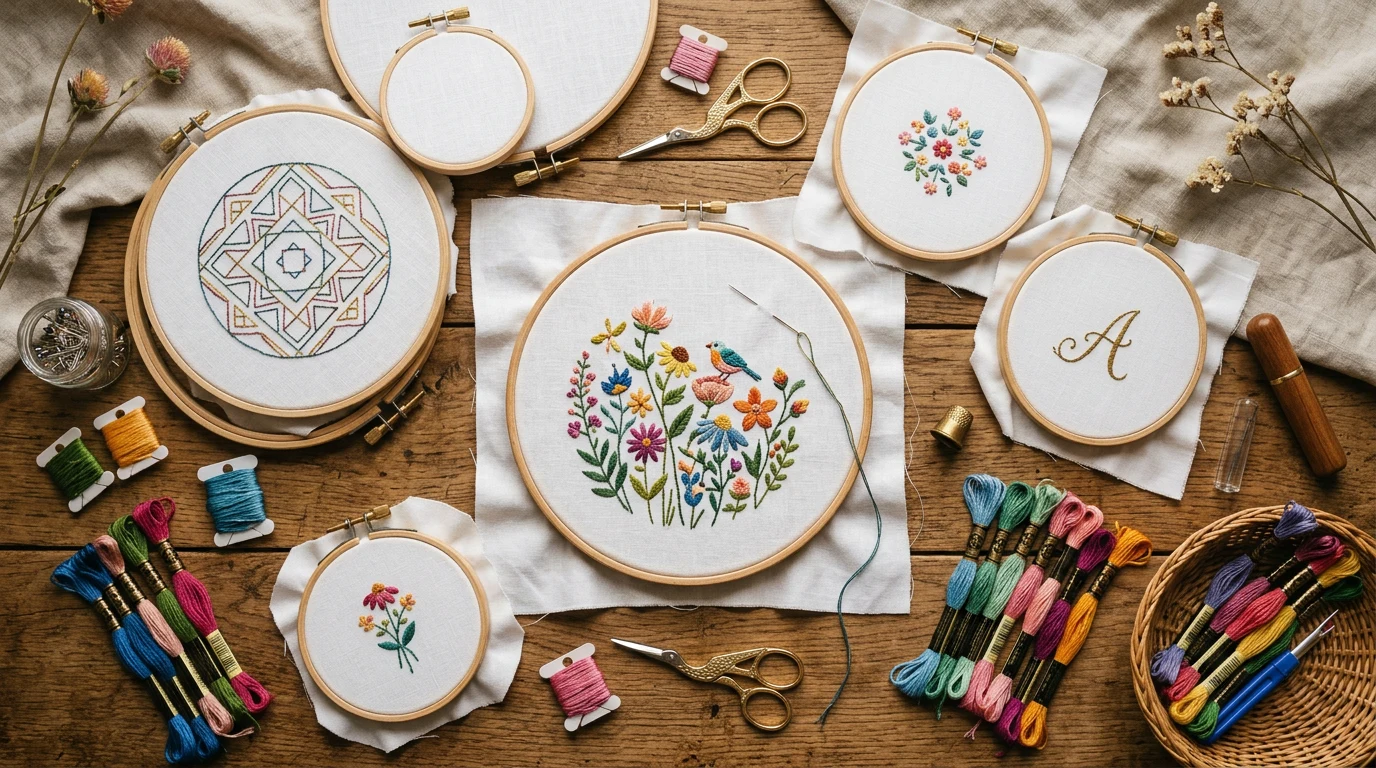
Buyer reviews consistently praise the value proposition. At just a few dollars each, you can stock up on multiple sizes without any financial anxiety. The bamboo is lightweight and comfortable to hold, and the brass screw mechanism adjusts smoothly. Available in sizes from 3 inches to 14 inches, there is a Darice hoop for virtually every project.
The main drawback, noted by many experienced embroiderers, is that bamboo does not grip fabric as firmly as beechwood. On slippery fabrics like satin or tightly woven linen, you may find yourself re-tightening more frequently. Wrapping the inner hoop with cotton twill tape solves this issue and is a common modification.
Pros:
- Extremely affordable, even for sets
- Wide range of sizes (3″ to 14″)
- Lightweight and comfortable for long sessions
- Available at virtually every craft store
Cons:
- Bamboo does not grip as well as beechwood
- May slip on smoother fabrics
- Quality can be inconsistent between batches (occasional rough spots or uneven rings)
2. Hardwicke Manor Beechwood Hoops
Best for: Premium stitching experience and hoop-framed displays
The Hardwicke Manor Beechwood Hoops are a significant step up from bamboo in both feel and performance. Made from European beech, these hoops have a natural grip that holds fabric securely without overtightening. The wood is smooth, evenly finished, and has a warm, honey-toned color that looks beautiful as a display frame for finished pieces.
Reviewers who have upgraded from bamboo hoops consistently mention the improved grip as the biggest difference. The beechwood naturally creates more friction against fabric, meaning less re-tightening during stitching sessions. The brass hardware is well-fitted and adjusts with satisfying precision.
These hoops cost more than budget bamboo options, which is the primary consideration. For embroiderers who stitch regularly and want a hoop that doubles as a display frame, the investment is worthwhile. Mastering 6 best embroidery hoops in takes practice but delivers great results.
Pros:
- Superior fabric grip compared to bamboo
- Beautiful finish suitable for framing
- Smooth, consistent construction
- Durable for years of regular use
Cons:
- Higher price point than bamboo alternatives
- Fewer size options than budget brands
- Slightly heavier than bamboo (noticeable on larger sizes)

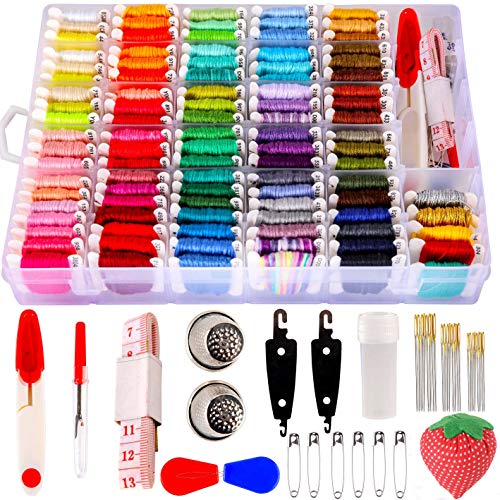
- ALL-IN-ONE EMBROIDERY KIT: 3 pre-printed “Enjoy Your Life” floral practice fabri
- BEGINNER-FRIENDLY: Includes 33 essential stitch diagrams + HD video tutorials; M
- ELEGANT GIFT PACKAGING: Comes with a premium rigid gift box to keep floss neatly
3. Clover Embroidery Hoop
Best for: Slippery fabrics and the most secure grip
The Clover Embroidery Hoop takes a different approach to the grip problem. The inner ring has a raised lip that creates a channel, and the outer ring nestles into this channel with the fabric sandwiched between. The result is an incredibly secure hold that virtually eliminates fabric slippage.
Made from lightweight plastic, these hoops are comfortable during extended stitching and will not leave marks on delicate fabrics. The grip mechanism is what buyers love most. Reviewers working with challenging materials like silk, satin, or very fine cotton consistently rate the Clover hoop as the best solution for maintaining tension.
The trade-off is size selection and aesthetics. Clover hoops come in fewer sizes than wooden options, and the plastic appearance makes them less attractive as display frames. They are strictly functional tools rather than display pieces.
Pros:
- Best fabric grip of any hoop on this list
- Lightweight plastic is comfortable for long sessions
- Will not leave marks on delicate fabrics
- Inner lip design prevents fabric from popping out
Cons:
- Limited size options
- Plastic appearance not ideal for display
- Higher price than basic bamboo for what is a plastic hoop
4. Susan Bates Hoop-La
Best for: Lightweight comfort and wide size range
The Susan Bates Hoop-La has been a staple in craft stores for years. These plastic hoops are featherlight, available in a wide range of sizes, and feature a smooth molded construction that is gentle on both fabric and hands.
Reviewers appreciate the comfort factor, especially during long stitching sessions or when working with larger hoops. The lightweight plastic means significantly less hand fatigue compared to wooden hoops of the same size. The snap-together design is quick and easy to use, though some buyers note it does not hold fabric quite as securely as screw-tension hoops.
Available in sizes from 3 inches all the way up to 14 inches, the Hoop-La line covers projects of every scale. The larger sizes are where the lightweight advantage really shines.
Pros: Understanding 6 best embroidery hoops in is key to a great craft hobby.
- Extremely lightweight, reducing hand fatigue
- Wide range of sizes available
- Smooth plastic is gentle on fabric and hands
- Affordable pricing
Cons:
- Does not grip fabric as securely as wood or lip-style hoops
- Plastic can crack if overtightened or dropped
- Not suitable for display framing
5. Nurge Premium Beechwood Hoops
Best for: Dedicated embroiderers who want the best
The Nurge Premium Beechwood Hoops are widely regarded as among the finest embroidery hoops available at a consumer price point. Made in Turkey from carefully selected beechwood, these hoops feature exceptionally smooth finishing, precise ring fitting, and a robust brass screw mechanism.

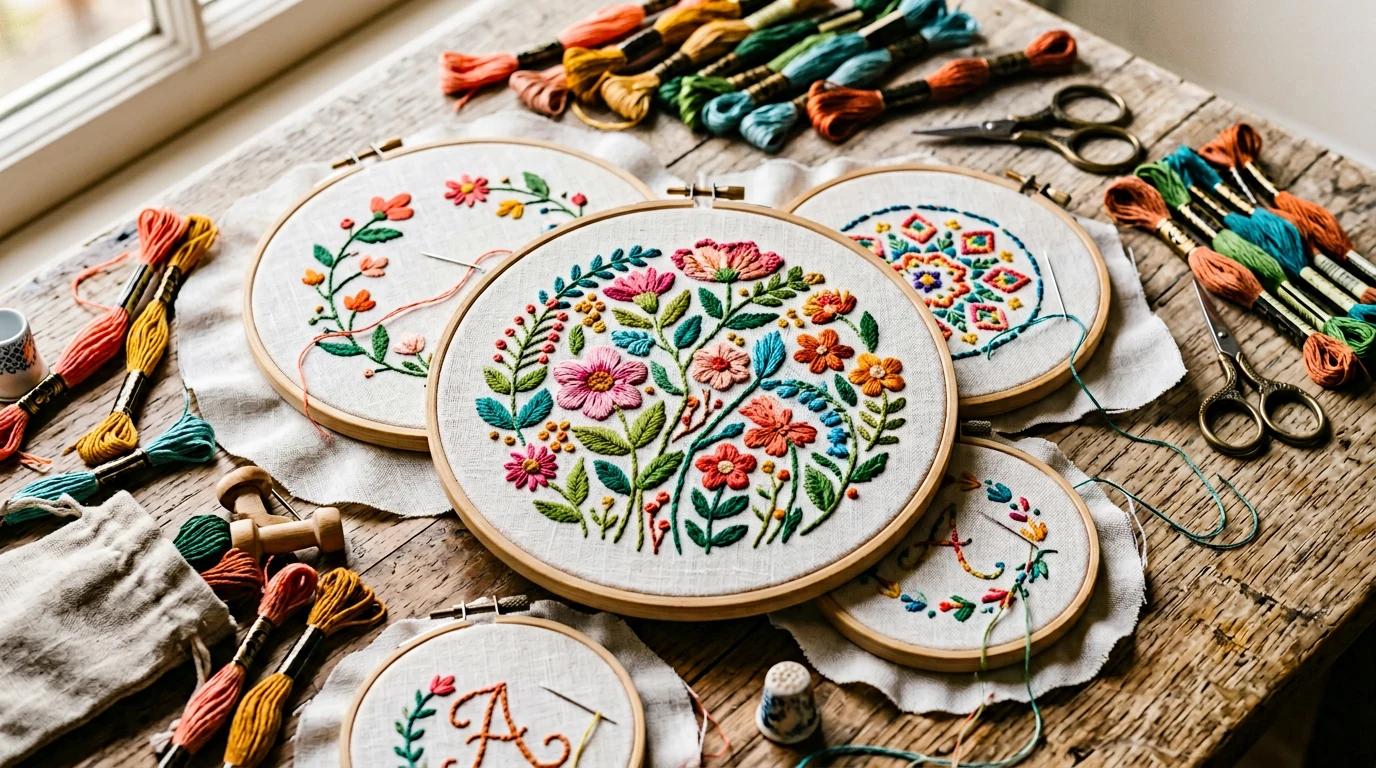
Experienced embroiderers consistently praise the fit and finish. The inner and outer rings are precisely matched, creating even tension across the entire fabric surface. The beechwood grain is tight and uniform, providing excellent grip without any rough patches that might snag thread.
At the highest price point on this list, Nurge hoops are an investment. Buyers who stitch daily or consider embroidery a serious pursuit consistently report that the quality justifies the cost. For casual or beginning stitchers, a less expensive option is perfectly adequate.
Pros:
- Exceptional build quality and finish
- Precise ring matching for even tension
- Superior beechwood grain for excellent grip
- Beautiful enough for permanent display framing
Cons:
- Most expensive option reviewed
- Limited size range compared to budget brands
- May be excessive for casual or beginning embroiderers
6. Frank A. Edmunds Spring Tension Hoop
Best for: Quick setup and no-fuss stitching
Spring tension hoops work completely differently from screw-style hoops. The Frank A. Edmunds Spring Tension Hoop uses a metal inner ring connected to a C-shaped outer ring with a spring mechanism. You squeeze the handles to open the ring, place your fabric, and release. The spring tension holds the fabric automatically.
Reviewers love the speed and convenience. There is no screw to adjust, no fiddling with tension. Squeeze, place, release, and stitch. The rubber coating on the inner ring provides excellent grip, and the tension is consistent across the fabric surface.
The downsides are size limitation (most spring hoops top out at 7 inches) and the fact that some embroiderers find the metal frame less comfortable to hold than wood or plastic during extended sessions. Spring hoops are also not suitable for display framing.
Pros:
- Fastest setup of any hoop type
- Consistent, automatic tension
- Rubber grip prevents slipping on all fabric types
- Durable metal construction
Cons: When it comes to 6 best embroidery hoops in, preparation matters most.
- Limited to smaller sizes (typically 7″ max)
- Metal frame can be less comfortable than wood
- Not suitable for display framing
- Spring tension is fixed (not adjustable)
How to Choose the Right Embroidery Hoop
The best hoop for you depends on how you plan to use it. Here is a decision framework.
You are a beginner on a budget: Start with Darice bamboo hoops. Buy a 6-inch for general work and add more sizes as needed.
You want to display finished pieces in the hoop: Invest in Hardwicke Manor or Nurge beechwood hoops. The wood is attractive enough to serve as the permanent frame.
You work with slippery or delicate fabrics: The Clover hoop’s lip design or the Edmunds spring tension hoop are your best options for maximum grip.
You stitch for long sessions and value comfort: The Susan Bates Hoop-La is the lightest option and reduces hand fatigue significantly on larger projects.
You switch between projects frequently: Spring tension hoops let you swap fabric in seconds without any screw adjustments.
Hoop Care and Tips
A few simple practices extend the life of your hoops and improve your stitching experience.
- Remove your fabric from the hoop between sessions. Leaving fabric clamped in a hoop for days can create permanent ring marks, especially on delicate fabrics.
- Wrap the inner ring with cotton twill tape. This adds grip for bamboo hoops and protects delicate fabrics from wood grain marks. Secure with a few hand stitches.
- Store wooden hoops in a dry location. Humidity can warp bamboo over time. Beechwood is more resistant but still benefits from reasonable care.
- Tighten incrementally. Rather than cranking the screw all the way at once, tighten slightly, pull fabric taut, then tighten more. This distributes tension evenly.
According to the Spruce Crafts guide to embroidery hoops, the hoop size should ideally be large enough to frame your entire design, reducing the need to re-hoop and risk distorting completed stitches. When that is not possible, use the largest hoop that comfortably fits the section you are working on.
Frequently Asked Questions
What size embroidery hoop should a beginner start with?
A 6-inch hoop is the most versatile starting size. It is large enough for most beginner patterns but small enough to hold comfortably. If you plan to work on larger designs, a 7-inch or 8-inch hoop is also a good early investment.

Do I need a wooden or plastic embroidery hoop?
Both work well. Wooden hoops (especially beechwood) offer better fabric grip and look nicer for display. Plastic hoops are lighter, will not leave marks on fabric, and are easier to clean. Many embroiderers own both and choose based on the project.
Why does my fabric keep slipping in the hoop?
Slippery fabric in a bamboo hoop is the most common cause. Wrapping the inner ring with cotton twill tape adds friction and usually solves the problem. Also check that you are tightening the screw enough. If the problem persists, a Clover lip-style hoop or spring tension hoop provides a more secure grip.
Can I leave my embroidery in the hoop overnight?
For short breaks, leaving fabric in the hoop is fine. However, if you are not going to stitch for a few days or longer, it is best to remove the fabric. Prolonged clamping can leave visible ring marks, especially on lighter or more delicate fabrics. The marks can sometimes be removed with washing and pressing, but prevention is easier.
Are expensive embroidery hoops worth the investment?
For beginners, budget bamboo hoops are perfectly adequate. As you stitch more regularly and develop preferences, upgrading to beechwood or specialty hoops can genuinely improve your experience. If you plan to display finished work in the hoop, investing in an attractive beechwood hoop serves double duty as both a tool and a frame.
What should I look for in a quality embroidery hoop?
A good embroidery hoop should hold your fabric taut with minimal adjustments, stay comfortable in your hand during long stitching sessions, and avoid leaving marks or damaging your work. You’ll want to avoid hoops that slip constantly, squeeze your hand, or warp after a few uses.
Which embroidery hoop is best for beginners on a budget?
The Darice Wooden Embroidery Hoops are an excellent choice for beginners, offering bamboo construction with a brass tension screw at a budget-friendly price of $2-8. These are the hoops most embroiderers start with, and many find they don’t need to upgrade as they develop their skills.
What’s the difference between wooden, plastic, and spring tension embroidery hoops?
Wooden hoops like bamboo offer durability and classic grip for everyday stitching, plastic hoops provide lightweight comfort and are available in various sizes, while spring tension hoops use metal with rubber grips and require no adjustments during stitching. Each type performs differently depending on your fabric and project needs.
How do I choose an embroidery hoop size for my project?
Most embroidery hoops come in sizes ranging from 3 inches to 14 inches, and you should select one that’s slightly larger than your design to keep all edges properly tensioned. For beginners, starting with a medium size like 4.75 to 7 inches gives you versatility for various projects while remaining comfortable to hold.
These statements have not been evaluated by the Food and Drug Administration. This information is not intended to diagnose, treat, cure, or prevent any disease. Content is for informational purposes only and is not medical advice; consult a qualified healthcare provider before starting any supplement. As an Amazon Associate we earn from qualifying purchases.
